5 Diaspora Iranian Novels to Read
These five novels by Iranian diaspora authors are worth picking up once.
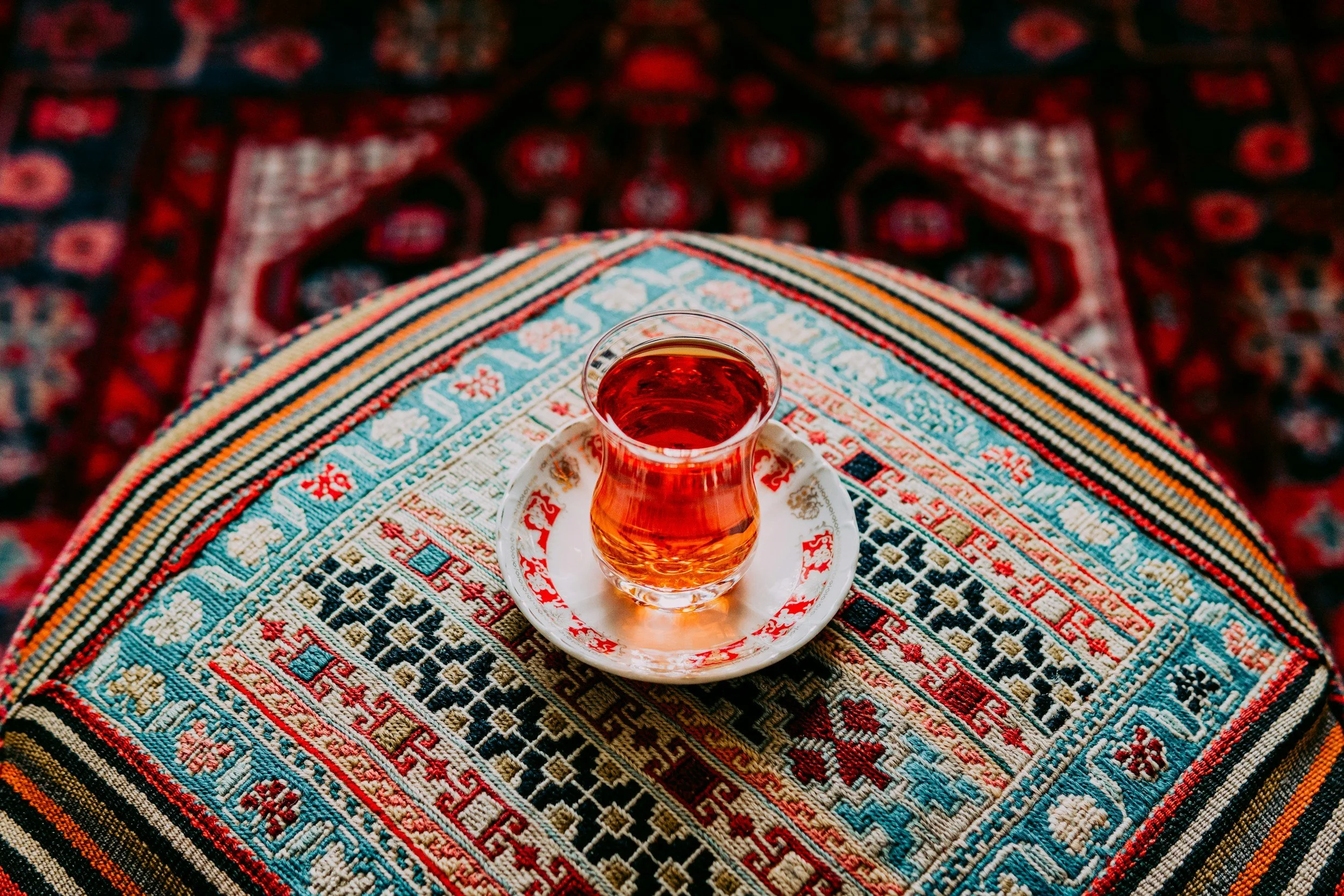
My journey with Iranian and diaspora literature has been slow, but throughout the years, I’ve been intentionally trying to read more and more from the books that do manage to come out of Iran. In the English-speaking world, due to how Iran is closed off, we tend to get more diaspora books than books in translation. Nothing wrong with that—I tend to read a lot more diaspora novels. That doesn’t make diaspora writers any less Iranian either.
People also don’t really learn Farsi, unless, in the American context, they want to work for specific branches of the government. Iranian publishing is also so isolated and sometimes censored that the stories and narratives that are very interesting and thought provoking are shoved back down to the bottom of the pile.
All of this said, let me introduce myself real fast: my name is Ashley, and I am an Iranian American writer. I’ve spent a lot of my life in the United States and grappling with what people think about Iranians and the misconceptions the media puts out there.
I wanted to make this blog post after the war because of sentiments I was seeing about Iran and its diaspora. A lot of people simply don’t know about what it means to be Iranian, so when I saw average people and social justice warriors alike adopting stances that really were not it (like being pro-Iranian government because they supported Palestine), I turned back to books.
This blog post is in five diaspora Iranian novels that I think are worth picking up at least once. Give them a chance!
The Nights are Quiet in Tehran by Shida Bazyar
I found a copy of The Nights are Quiet in Tehran randomly at my local library before it was nominated for any awards, and when I see a book by an Iranian author I tend to always check it out on the spot. This was one of those books.
The Nights are Quiet in Tehran takes place across multiple time periods. We begin in 1979, when Behsad, who sees himself as a revolutionary and an activist, fights for a new future in a tumultuous Iran. He meets the love of his life, and that leads them to Germany in 1989.
With his wife, Nahid, they look for news from home. Iran has been taken over by the Islamic Republic and the mullahs. In 1999, ten years later, Nahid and her daughter, Laleh, return to Iran and find it unrecognizable in some ways. Another decade passes and Laleh’s brother finds the Green Revolution similar to the demonstrations happening in Germany.
The Limits of Whiteness: Iranian Americans and the Everyday Politics of Race by Neda Maghbouleh
The Limits of Whiteness is one of those books I’ve known about for a while, but it took me some time to get to the book itself. This is actually an academic book, but I found the writing itself to be quite accessible.
This is a book that is uniquely American in its context—I can’t vouch for how it applies in other cultural contexts. Maghbouleh is specifically tracing how Iranian Americans have been legally seen as white in the American system, but the way they’re treated is anything but.
Not only does this open up a can of worms like, for example, when you’re applying to college, but it leads to actual discrimination and poor perceptions of Iranian Americans. I found myself nodding along to this book because of how accurate it was in depicting these stories.
Liquid by Mariam Rahmani
Liquid is one of those books I think might be divisive, especially considering how poor its Goodreads reviews are, but I actually genuinely enjoyed Rahmani’s novel a lot. Its protagonist is an Indian-Iranian-American scholar following in the shadow of her parents’ footsteps. She decides to start a study on dating in Los Angeles, which stems from a joke her fellow PhD friend made.
She begins studying the people she dates in Los Angeles, giving a thriving look into the people living in the city and what they do with their lives. The novel takes a deep turn when her father falls in ill in Tehran and she has to go there indefinitely to take care of him.
And somewhere along the way, she might find a romance next door even. Only time will tell!
The Lion Women of Tehran by Marjan Kemali
I wrote in my last blog post about Iranian literature that I love Marjan Kemali’s work, and The Lion Women of Tehran is one of the best books she has put out so far.
In it, Ellie finds herself moving across town to a poorer neighborhood after the death of her father. There, she meets Homa, the daughter of communists, and finds a new way of living and thinking about the world. But this is 1950s Iran, and by the time they’re in school, their social and political classes show a stark division between the two.
We see how their relationship shifts and molds with the politics of Iran during that time, as well as how Iran itself is rapidly changing in such a short amount of time.
Martyr! by Kaveh Akbar
This is probably one of the best known books on this list, and something I also read immediately when it came out. I was deeply familiar with Kaveh’s poetry work and had even attended workshops led by him, so I knew his writing style going into it.
Our main character in this novel is Cyrus, an addict and drunk who also happens to be a poet who’s in his MFA. His life has been defined by the death of his mother, who was in a plane shot down by the United States (a true event, by the way). Then his father brought them to America work at a chicken slaughter farm.
Cyrus is grappling with his past and the concept of martyrs throughout the novel, meets an artist dying and having a retrospective on it at the Brooklyn Museum. That leads to some more philosophical questions throughout the course of the novel, making this one a deep read for a weekend.
Follow me below on Instagram, Goodreads, and Letterboxd for more.
![Jeju-do (제주도) is one of those places that reminds you of how stunning the world is
[7.12.2024 부터 7.14.2024 까지]](https://images.squarespace-cdn.com/content/v1/5ea1f794501b7153b29e7cd7/1721033601522-554E76HR01JUHDWZBJ1I/image-asset.jpeg)