Best 6 Korean Historical Novels
These are some of the best historical novels set in Korea.
If you’re new here, and stumbled upon this blog through the mythical powers of the Internet, welcome! I know a lot of visitors to my website are people who randomly come upon this website through search engines like Google, but I also do have a lot of visitors who come back. Regardless: my name is Ashley, and I started this blog in order to keep track of everything I’m coming across in the world.
Once upon a time I worked professionally at an online outlet where half of my job was working as a film and television critic, where I would binge watch all of these shows and movies before they came out to get a review/interview up on the site. The other half of the time I would write listicle articles.
And you’d think that I really liked listicles from how many I wrote back then, but that really wasn’t the case. It was what I had to do in order to fit a strict quota. Those days weren’t the most fun, and I wasn’t paid much, which means that I was kind of just doing this for the love of movies. I left that job two years ago and continue to keep my foot in the industry through this blog.
But nowadays I’ve been returning to this form on my own blog naturally, and in some ways that feels liberating. I don’t have to meet a quota. Instead I can just sit back, write, and think about the kinds of things, whether it’s books and movies, I want to share with my readers because I’m passionate about them.
Korean literature is my jam. I did my entire master’s thesis around Korean women’s literature in the 1900s, before Korea was under the dictatorship and then a democracy, and nowadays a lot of the books I read tend to simply be Korean women writers in translation—albeit more modern than the ones I surrounded myself with in grad school.
I also lived in Korea for two separate intensive language studies. I remember my time in Seoul and Busan fondly, but it’s these experiences that shaped a deep love for Korean history.
All of that said: I’d love to share my top six Korean historical novels in this blog post!
Beasts of a Little Land by Juhea Kim
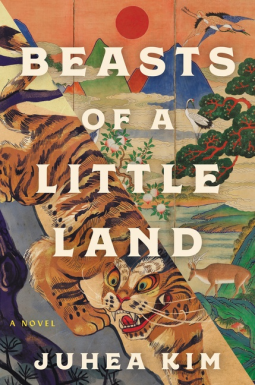
When I first heard about this book, I initially wanted to pick it up because of how the female protagonist is actually a kisaeng. For those unfamiliar with the concept, kisaengs were highly trained courtesans that were considered one of the lowest people in society, but they were incredibly talented with their writing and art forms. I did a lot of research on them when I was in grad school—it’s such an interesting ecosystem they once had.
Anyways, this novel opens up with a tiger attack. A young Japanese soldier is saved from a Korean tiger on the mountain by a hunter, setting the scene for what’s to come. In Seoul, where our main character is training as a kisaeng, she befriends an orphan boy. However, as they grow older, their paths diverge quickly.
The boy becomes involved with the Korean independence movement from the Japanese, while the girl becomes a kisaeng and his highly sought after for her services. We follow them throughout the years, from the sweet to bitter moments, showing us that some stories aren’t what we expect them to be.
Capitalists Must Starve by Park Seolyeon
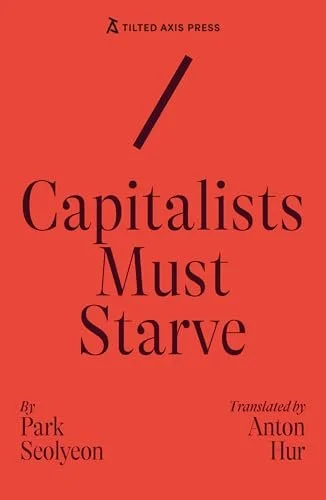
At the time of typing this, Capitalists Must Starve is actually a book I picked up relatively recently. I knew about because I follow Tilted Axis Press’ releases quite closely, and I was pleasantly surprised to see a copy of it for sale at the McNally Jackson I frequent at Rockefeller Center in New York. So I bought that copy when I was there!
Capitalists Must Starve takes place during the Japanese colonial period, like so many other books I’ve listed out here, but its protagonist is a real figure in Korean history. We meet her at the beginning of the novel when she’s married off to a man fighting for Korean independence, and she follows him to Manchuria to fight the big fight.
But things don’t go as planned, and she ends up in Pyongyang alone. Forced to work in order to survive, she turns to factory work (which many women did during this period of Korean history if they needed wages), but she instead leads the fight for proper rights and pay—even if it means sacrificing herself somewhere along the way.
Can’t I Go Instead by Lee Geum-yi
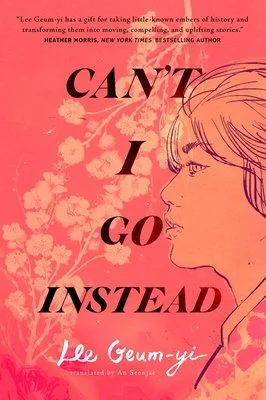
This was the only novel I’ve listed here that I didn’t know about before picking up. One day I was wandering my local library and stumbled upon this thick book in the new fiction section, which was a pleasant surprise because anyone who knows my taste is well aware I will read anything set during the colonial period. And that’s how I came to know Lee Geum-yi as an author!
Can’t I Go Instead is an epic story in its scope. It might actually be too epic at times, but I was fine with it considering the length—Min Jin Lee’s work is a struggle for me to get through sometimes simply because they’re too long. Regardless, this novel follows two girls. One is the daughter of a Korean nobleman and collaborator with the Japanese, while the other is her servant.
When the noble’s daughter gets caught with her pro-Korean independence lover, her father needs to do damage control. He sends the servant to be a comfort woman in her daughter’s place, kickstarting a tragedy in her life, but we see how their paths completely diverge from this point onward in the novel.
Human Acts by Han Kang
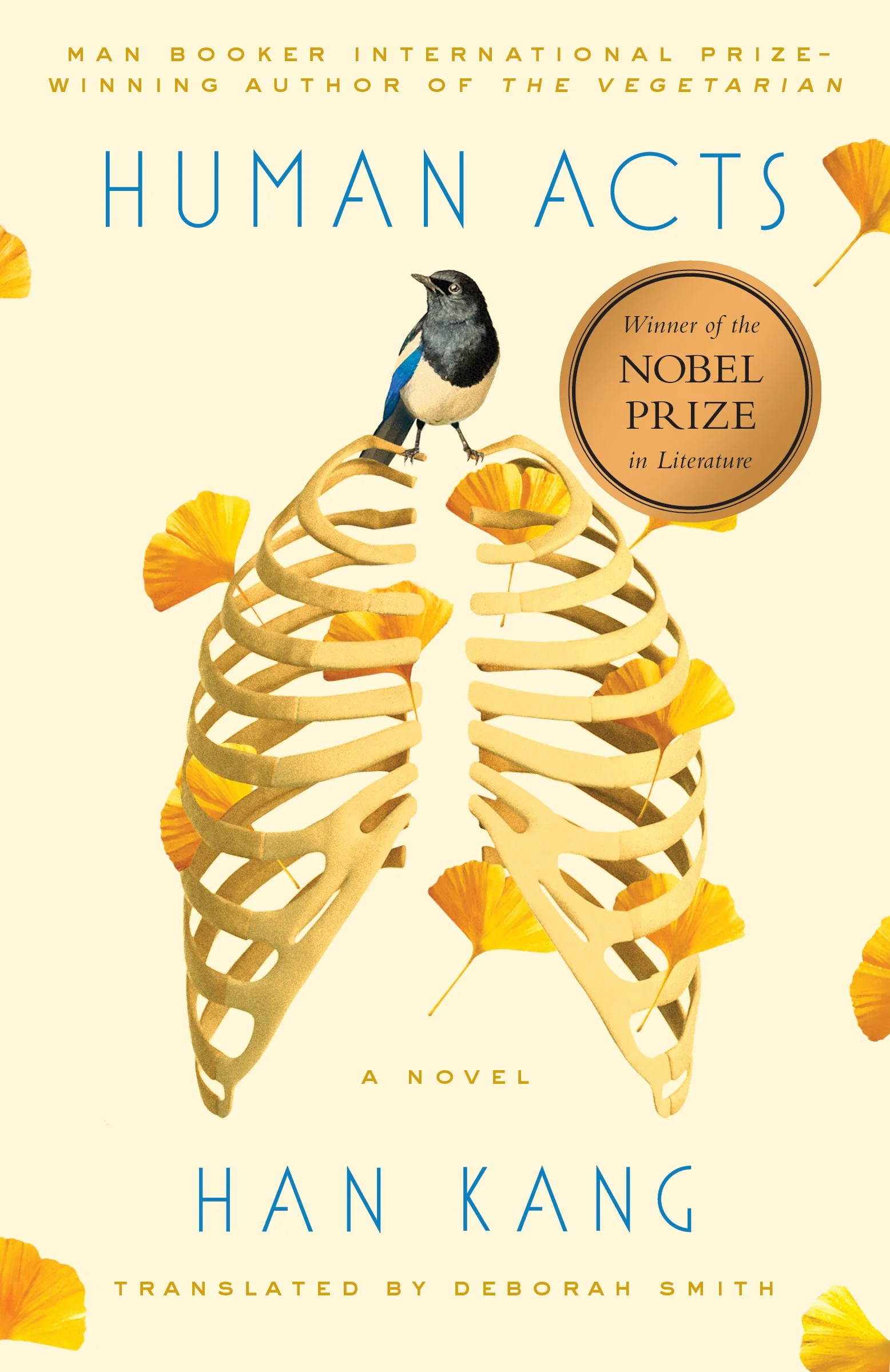
Han Kang has made quite the name for herself since she’s won the Nobel Prize for Literature, but I was deeply invested in her work and writing years prior to her winning such a big award. There’s a reason why I always get advance copies of her books—I was someone who really was on this grind years before everyone else was!
Anyways, Human Acts is one of the books that actually got her the award. It’s set during the Gwangju Uprising in the early 1980s, which I highly recommend reading about it you want to learn more about South Korea’s move to a democracy. Gwangju is still one of the most liberal cities today.
In this novel though Han gives life to the people who were involved with the protests, from a young boy who was killed by the soldiers to a journalist weaving through all of the stories of the living and deceased. It’s a bleak but short novel, and it’s quite important for understanding contemporary Korean history beyond the colonial period.
The Island of Sea Women by Lisa See
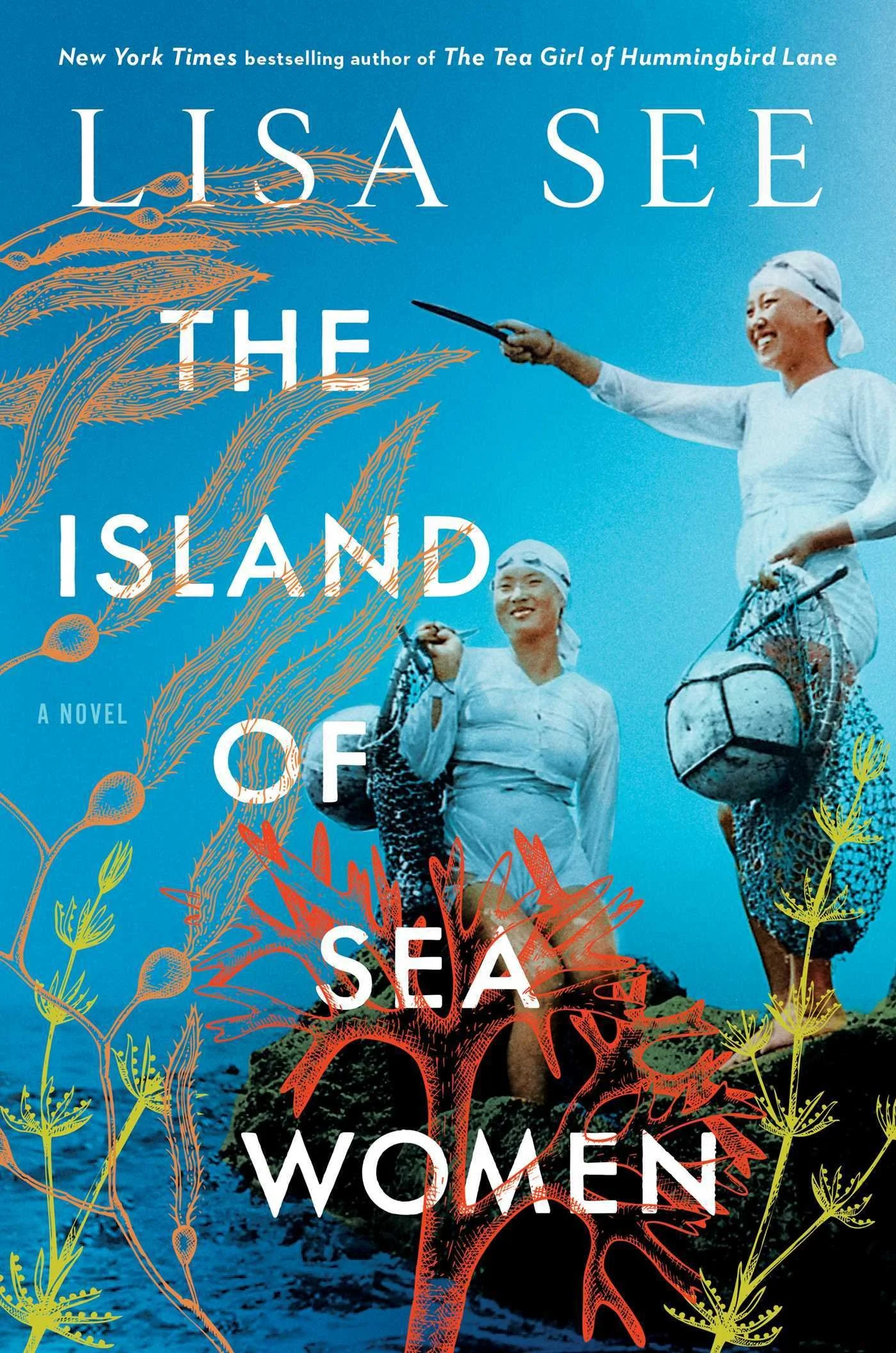
Here’s a fun fact: for so long I’ve known about Lisa See’s work, but never actually managed to pick up a copy of one of her novels. It’s been something I’ve meant to do, but when I saw that she actually published a book on the Jeju haenyeo and what happened to the people of Jeju, I was shocked.
Then when I read the book, I was even more shocked. This book is absolutely fantastic, and I was reading about how See did extensive firsthand research and interviews to create this story. It opens in Jeju in the 1930s, still under the grip of Japanese colonialism, but through the perspective of two young girls: Mi-ja and Young-sook.
They have different backgrounds but come together through the haenyeo community, but when something major happens, their relationship begins to fracture and exposes how different they are exactly. With the political and historical events, especially considering what happened in Jeju in the later half of the 1940s, we’re going to see how their paths diverged.
The Red Palace by June Hur
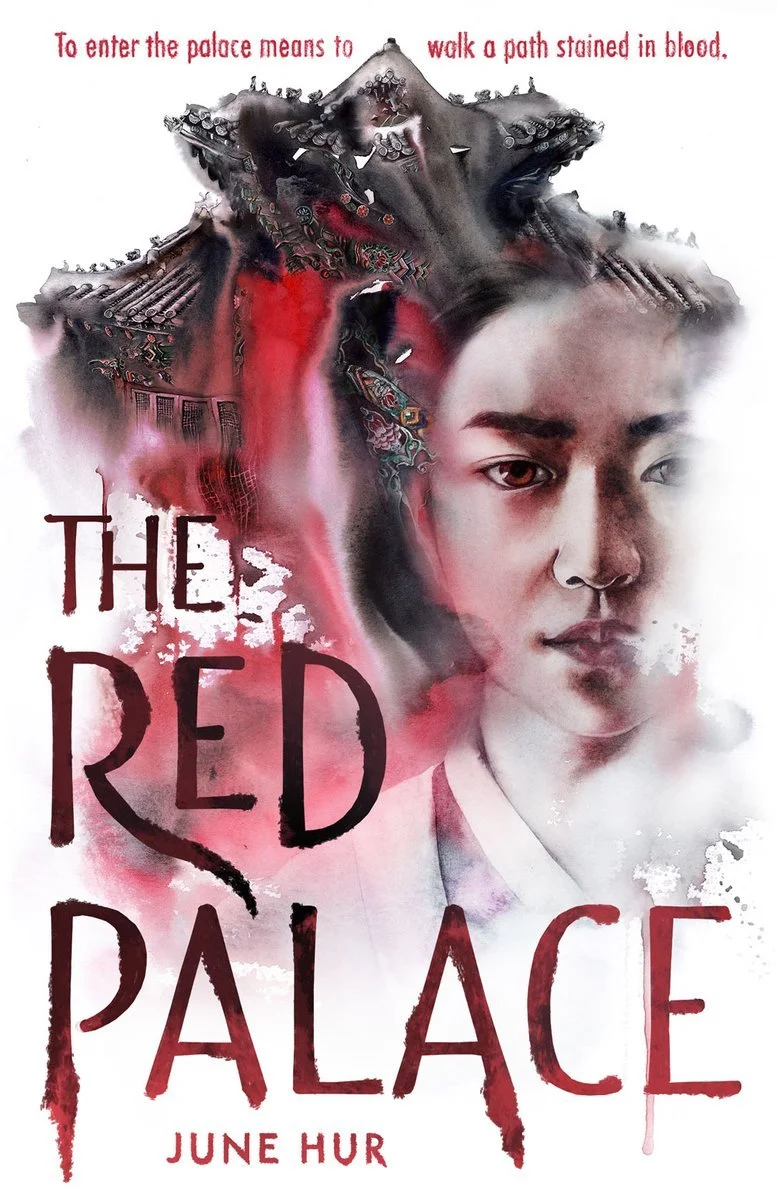
I feel like this list is one where we delve deep into the colonial period a lot, and that’s something I want to research more—how modern writers keep going back to this specific period and writing about this kind of trauma versus going deeper back. Or, at least, that’s what reaches us in translation. Regardless though, I wanted to include The Red Palace for a variety of reasons.
Set during the Joseon dynasty in the 1700s, our female lead, Hyeon, is a palace nurse who keeps her head down and does her job. But when four women are murdered in the span of one night, she finds herself at the center of court politics and the secrets that might get her killed in the end.
When she crosses paths with police inspector Eojin, who is investigating the crime, it adds a new layer of complexity and eventual romance to what’s happening. But first? Hyeon has to survive what’s going on in the court without losing her own head.
Follow me below on Instagram, Goodreads, and Letterboxd for more.
![Jeju-do (제주도) is one of those places that reminds you of how stunning the world is
[7.12.2024 부터 7.14.2024 까지]](https://images.squarespace-cdn.com/content/v1/5ea1f794501b7153b29e7cd7/1721033601522-554E76HR01JUHDWZBJ1I/image-asset.jpeg)