Gulf by Mo Ogrodnik
Review of Gulf by Mo Ogrodnik
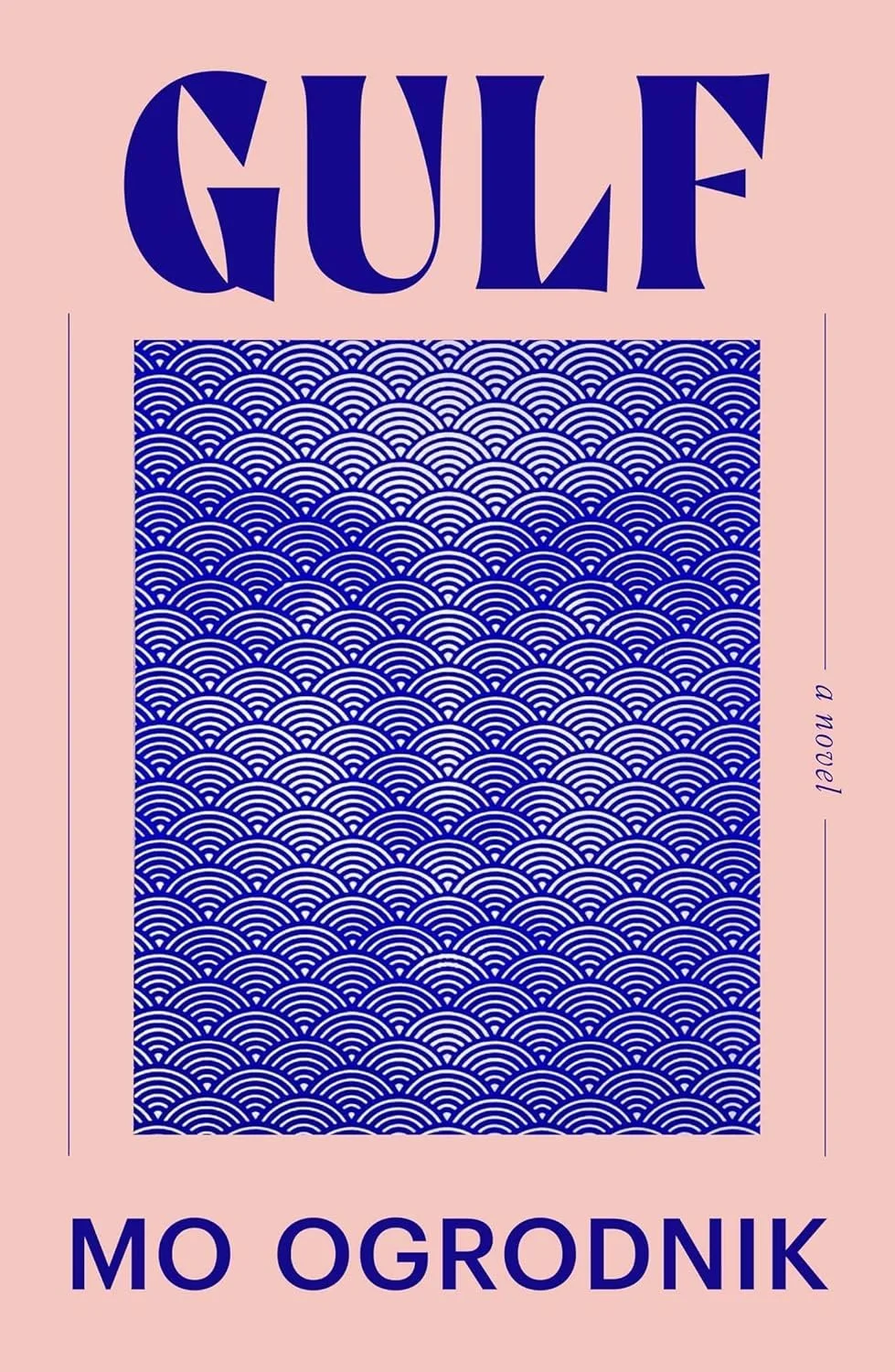
Gulf by Mo Ogrodnik (2025). Published by S&S/Summit Books.
If you’re new here, and stumbled upon this blog through the mythical powers of the Internet, welcome! I know a lot of visitors to my website are people who randomly come upon this website through search engines like Google, but I also do have a lot of visitors who come back. Regardless: my name is Ashley, and I started this blog in order to keep track of everything I’m coming across in the world.
A lot of my blog posts for the past year or so have been starting with discussing the state of my employment, as I one of the many people looking for a full-time job when it seemed impossible to find one. This blog post (although it’s coming out months later from when I’m typing this due to the sheer nature of my publishing schedule) is one of the last blog posts to come out of the period where I was lazing about and doing content creation/freelancing full time.
It was a fruitful time, but I was just ready to work a corporate job and see what that was like. In the days leading up to when I was starting my job, I was reading, writing, and consuming as much as possible because I had this fear that I was going to not have time once I was starting this 8-5 job.
This review stems from a book that I had heard about through the reviewer pipeline before it came out. I was really curious about the premise of this book because not only was it set in the Gulf countries, but it focused on drastically different women navigating life in these countries. That’s a really compelling premise to me, especially considering how I’ve been wanting to diversify the kinds of books I read.
SWANA literature, or literature set in the Middle East/Southwest Asia, has been something I want to read more of. The book side of my blog has had a heavy emphasis on Asian-American and East Asian literature, but I think I’m very much ready to try reading new books from other regions and voices.
And so when I picked this book up, I ended up reading it in over the course of a lazy Sunday. It was a quick read to me because of how it switches perspectives, but I was also quite invested in this.
Let’s get into the review!
The story of several different women, natives and immigrants alike, living and working within the Arabian Gulf.
Throughout the course of the novel, we see the perspectives of five different women who ended up in the Arabina Gulf countries in different ways. Each chapter of the book switches perspectives between these five women, and while we sympathize with them in some ways, there are others that are really impacted by their actions.
Several of these women do cross paths, some in ways that expose different aspects of their personality in not-so-flattering ways—hence why I wrote the impact statement in the previous paragraph. I saw this as a bit of a kaleidoscope when I reading, especially when we become invested in one story and put the pieces of another story through it.
One of the main characters is a Saudi housewife who, as you keep reading through her story, you can’t help but to feel bad for in the beginning. She’s wealthy but in a marriage where she’s not happy at all, especially considering her power as a woman and wife is limited, and when she has a child it leads to a new form of conflict internally.
One of the other characters is a Filipina maid working within her home. She lost her beloved child when there was a flood in the Philippines, and that began the fracturing of her life. She ends up leaving the Philippines behind in order to make some money and provide for her surviving family members after the tragedy, and she’s placed in Saudi housewife’s home.
However, their interactions with each other are less than pleasant. When the caretaker sees how the housewife neglects her child in some ways, she tries to take matters into her own hands, but that ends up with devastating consequences, showing the cruelty of the other character.
At the same time, an American art curator comes to Abu Dhabi for a new job at a museum. She knows very little about the area and the people living within it, which leads to conflict not only in her personal life, but her professional life as well when she starts uncovering the complexities of the issues of the UAE. Things escalate when she allows a foreign girl in her home, but in the middle of the night the girl flees and sets herself on fire.
Which leads us to the story of an Ethiopian girl who, in an attempt to try and navigate her life independently, leaves behind her mother in Ethiopia. While trying to get out of the country, she ends up being trafficked and sent to the United Arab Emirates, forcing her confront what she left behind and how she’s unable to actually control her own life now too.
Finally, our last character is a Syrian woman who’s in an arranged marriage she doesn’t actually want, leading some complex feelings and depression within her. Her husband is an ISIS fighter, putting her in direct conflict with the ideals of the new nation they’re trying to form and the people on the streets who don’t want them there. But when her husband dies and she’s passed off to a new one, she has to confront if this is actually what she wants.
Overall Thoughts
This was such a fascinating book for me to read, and I really appreciated the different perspectives scattered throughout the novel. I was especially interested in the stories of the Ethiopian girl and the Filipina worker, and although we only get them every few chapters or so, I was the most invested in their stories.
We learn to feel for all of these women, their flaws and all. I do wonder and question though why the two Middle Eastern women’s perspectives depict them in acts of cruelty specifically, especially considering this is a novel set in the region. I wonder if that reinforces stereotypes about the culture and people in general, and while there are women definitely like this, it contrasts to the naive white woman discovering what’s going on and the two migrant workers.
That’s some food for thought. All of these women are definitely put into a pressure cooker, and I do think in these patriarchal systems with heavy pressure would bring out the worst in people at times. However, I did want to read a novel written by a native from the region, in translation, about women to get a different perspective.
I say pick this one up though if you’re interested. It’s solid writing and character building at the end of the day, and I’m glad I read it.
Follow me below on Instagram, Goodreads, and Letterboxd for more.
![Jeju-do (제주도) is one of those places that reminds you of how stunning the world is
[7.12.2024 부터 7.14.2024 까지]](https://images.squarespace-cdn.com/content/v1/5ea1f794501b7153b29e7cd7/1721033601522-554E76HR01JUHDWZBJ1I/image-asset.jpeg)