How I Won Two Poetry Fulbrights to Two Different Countries
Here’s How I Won Two Arts/Creative Writing/Poetry Fulbrights to India and South Korea
If you’re new here, and stumbled upon this blog through the mythical powers of the Internet, welcome! I know a lot of visitors to my website are people who randomly come upon this website through search engines like Google, but I also do have a lot of visitors who come back. Regardless: my name is Ashley, and I started this blog in order to keep track of everything I’m coming across in the world.
This blog post is a different note than my usual ones. I typically post reviews, travel diaries, and musings on my career as a writer and artist, but recently, at the time of typing this, I received some fun news: I won a Fulbright! Again!
The “again” part probably had you doing a double take, or looking at the title of this blog post and realizing I won two different Fulbrights over the course of two years. Here’s some major context: when I was in graduate school I applied for an arts Fulbright to India to create ethnographic poetry in Kolkata, India. My project was on climate change and the Chinese community in Kolkata, as I had done a Critical Language Scholarship (virtually) from there.
Upon returning from another Critical Language Scholarship to Korea, I did all the things, said my goodbyes as I applied for my visa, packed my life away. It’s a much longer story that I’d rather take offline, but I waited four months for the Indian government to deny me a visa. I ended up being withdrawn from my Fulbright from the US side, but was told I could still call myself a grantee/finalist/recipient and to apply again.
By that time, it was too late to apply to the next cycle. So I decided, in case I couldn’t find a job, I would pivot and apply to South Korea. I had done the NSLI-Y and Critical Language Scholarships there, and I knew I was interested in immigrant communities around Seoul and Busan.
So I pitched another ethnographic poetry project. I got a job, told myself I’d never get it for Korea, shrugged off the semi-finalist announcement. Then I was named a finalist and had to confront the reality of quitting my job or going to Korea. I ended up accepting in the end.
That’s how I won two arts Fulbrights! I thought I’d dedicate this blog post to explaining my process of winning Fulbrights in two different countries, as well as what I thought made my application stand out.
Having experience in country, and language skills, can be critical for applying to research and arts Fulbrights.
While the English Teaching Assistant programs, or ETAs, might accept people who don’t have prior connections to the host country, I often see a similar story with Fulbright research and arts applicants: they almost always have a connection to the country, especially when it came to countries like India and South Korea.
India did not have a language requirement, but when I applied for South Korea, you had to at least be novice level. That’s an abstract requirement, as novice literally means beginner by ACTFL standards, but when I applied to both countries I had completed Critical Language Scholarships (for Bangla and Korean) and a NSLI-Y scholarship (for Korean), so I had the language training that made sense for my project proposals and the complexity they required linguistically.
When selecting your country, especially in the arts/research context, think about a country you might’ve done research on before. For graduate students this might be clearer, but for undergraduates that might be murky territory. Study abroad connections are always solid, or if you did specialized research or a thesis on the region.
Language training becomes a more key part depending on what kind of project you’re pitching. If you’re making it into something where you conduct interviews or engage with the native population or artisans, then the application committee might be looking for more language skills to ensure you can wholeheartedly complete your project without any problems.
Make your project interdisciplinary or connect it to broader subject fields to explain its significance.
I’ve been professionally publishing my writing since I was sixteen, and I’m no stranger for what it takes to get funded as a writer or artist. It’s also a terrible situation a lot of the time because people will often shrug off the arts and see them as an afterthought, especially when you realize a committee is reviewing all research/arts applicants usually in one pool.
That’s a scary thought, especially if you deep dive into past recipients and see if a country has failed to give an arts award before or in recent years. However, my tactic has been to make the project as interdisciplinary as possible, as it fed into my overall interest in seeing poetry and the arts as an engaging and direct form of documentary work.
I specifically went down the ethnographic poetry route both times, as it worked with the frameworks I was studying during my graduate degree. My first affiliate to India was in film, and my South Korean affiliate was in anthropology. I genuinely think these methodologies made my projects incredibly unique and more worthy in the eyes of the committee.
I’m not saying you have to go this route though. I think it might make your project stronger if you create something more tangible beyond the creative aspect.
Have a strong affiliate before you submit your application.
The first time I applied for Fulbright, I had an awful time finding an affiliate. India thankfully let you submit one by the time you got the semifinalist notification, and by that point I had made my rounds begging, exhausted every personal connection I had, and was ready to give up until someone agreed to let me on.
Korea required one before the new calendar year hit, but I found someone fairly quickly that I wanted to work with. And I was lucky he wanted to work with me! I’m so grateful for that.
But with affiliates consider their presence in the country as well. In the Korean context I aimed for a SKY, which is one of the three top universities in the country, because I knew that it would gain brownie points in the Korean perspective of legitimacy. It also made sense because I was basing myself out of Seoul. I ended up at SNU, which is the best university in Korea.
Be strategic. Find an affiliate who is a good fit for you and can reflect positive on your project as a whole.
Create a strong portfolio that’s tailored to your project.
The portfolio is one of the most important parts of the arts Fulbright application—along with the Statement of Grant Purpose. My portfolio consisted of ten poems. Most of these poems were published in good, somewhat prestigious magazines, but I selected them because they fit more into the project I was trying to do.
So not only did I try to pick work that I already knew well landed with a public-facing audience, but I was very intentional. You have to describe briefly how the work fits in with your project, and I was upfront in the sense that a lot of these poems had elements of documentary work.
I also tried to show a clear progression in this style. The earliest poem I included was from the early 2020s, and then the most recent work included was from the same year I submitted the application (so 2023 and 2025). I submitted almost the same packet of poems both times, although the second time I added some new poems I thought were excellent.
Tailor your recommendations to show every side of your strengths, not just one.
Recommendations were something else I saw as a strategy. I knew that I could just get poetry recommenders and they’d writing glowing reviews of my work, but I didn’t want that to be the crux of my application.
For India, I had a poet who taught me in undergrad, a professor who taught me in graduate school for ethnography and communication studies, and then someone who knew me through the Critical Language Scholarship and could attest to my interest in Bengali studies and Kolkata.
For Korea, I had the same poet and communication studies professor, then switched out the last recommender for my thesis advisor for my master’s degree. He supervised my thesis on Korean women’s literature in the colonial period, which I figured he could attest to my extensive interest in the country.
Each recommender I had served a purpose. One creative, one academic, and one who could verify I had an interest (and was also academic). As someone who’s served on committees before, but not for Fulbright, I think this helped me seem more well-rounded beyond the “I’m a writer and artist” bit.
Do your research and contextualize your work in the broader themes of your host country.
I think this is one of the most important aspects to applying as an artist to a Fulbright. You need to prove why this body of work needs to be done right now, in this country, at this moment. What is the urgency? What is the context?
For me, I argued that Kolkata may disappear due to climate change and that the local Chinese community is actually disappearing. For Korea, we were at a peak moment for immigration and the questions surrounding Korea’s immigration policies going forward.
You also need to be able to explain why your art has to be done in this country. Why Korea? Why India? Some might be tracing family lineages and traditional crafts. Others might specialize in a specific form of writing indigenous to the region and being there will foster and cultivate your craft.
Really nail down the why. This will be a part of the Statement of Grant purpose and a key thing they’re going to be looking for at the end of the day.
Have questions? Feel free to contact me. My inbox is open—although it might take me some time to respond depending on how busy I am.
Follow me below on Instagram, Goodreads, and Letterboxd for more.
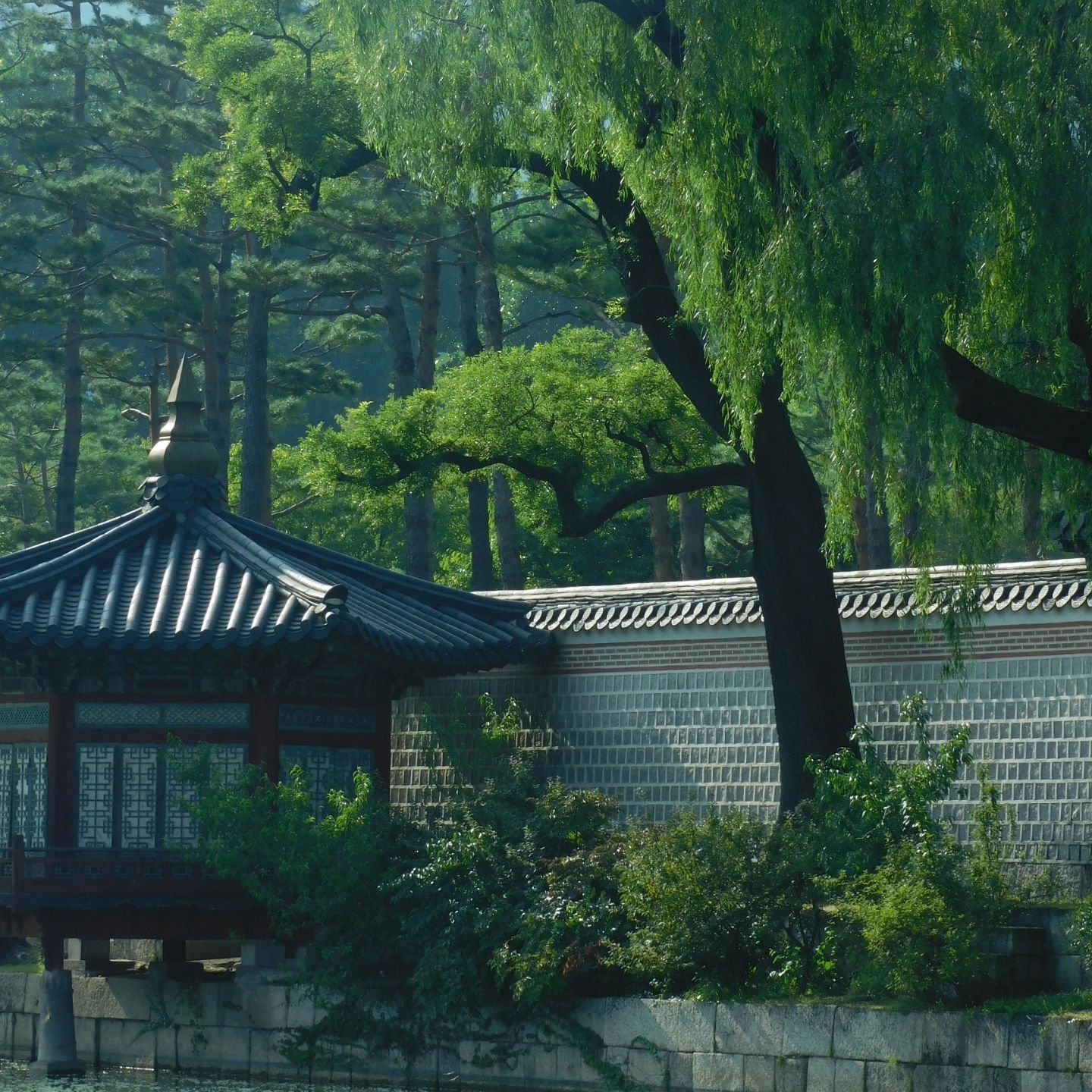
![Jeju-do (제주도) is one of those places that reminds you of how stunning the world is
[7.12.2024 부터 7.14.2024 까지]](https://images.squarespace-cdn.com/content/v1/5ea1f794501b7153b29e7cd7/1721033601522-554E76HR01JUHDWZBJ1I/image-asset.jpeg)