Midnight Timetable by Bora Chung
Review of Midnight Timetable by Bora Chung
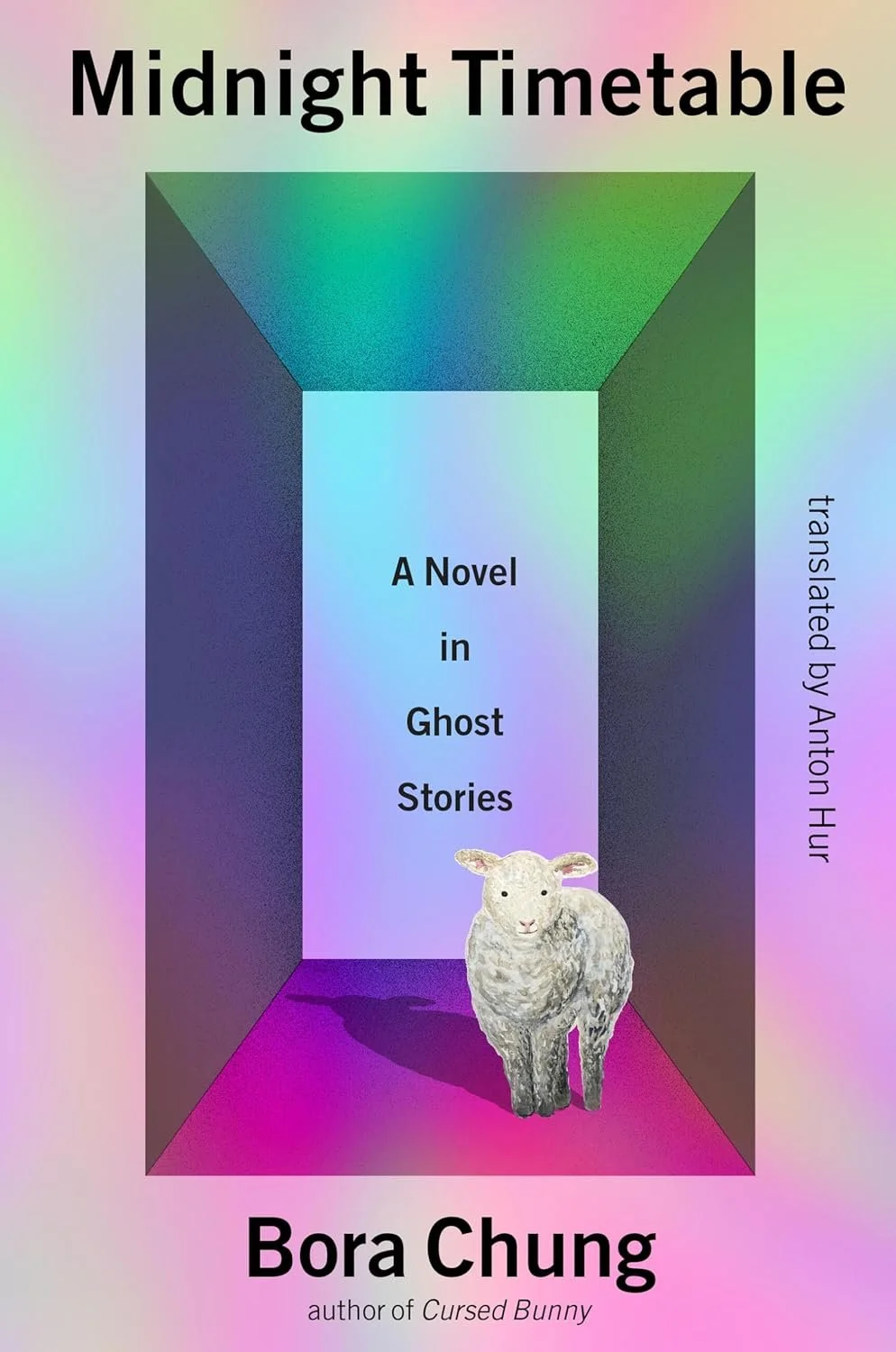
Midnight Timetable by Bora Chung, translated by Anton Hur (2025). Published by Alonquin ooks.
If you’re new here, and stumbled upon this blog through the mythical powers of the Internet, welcome! I know a lot of visitors to my website are people who randomly come upon this website through search engines like Google, but I also do have a lot of visitors who come back. Regardless: my name is Ashley, and I started this blog in order to keep track of everything I’m coming across in the world.
This blog post is interesting to me because lately, I’ve been struggling to get in my reading time. I was working for the longest time as a freelancer and contractor, but recently pivoted to an 8-5 job where I’m in an office. It’s not hybrid, so I’m always at home trying to put the puzzle pieces together of how I’ll get my reading done. I also continue working on this blog when I’m not at work, so the Instagram reels I’m fed about a 5-9 feel too real right now.
Anyways, I am trying to find that time to read here and there. Somehow I’m still on track for my Goodreads goal, even though I’ve been slowly giving up on the notion of reading goals in life. I think they can be a little too much pressure and takes the fun off of reading at the end of the day, and I want to read because I want to stay in touch with literature while also pursuing my side career as a writer.
Something that I find I’m alway wanting to read more of is Korean literature. It’s always been one of my core areas, but I also did my master’s thesis on Korean women’s literature. So when I saw a copy of Midnight Timetable at my local library branch, I picked it up immediately.
It was a fairly quick read—I finished it in about an hour and a half. Let’s get into the review!
At a research center called the Institute, its employees find out about how and why the objects housed there are haunted.
Bora Chung, as an author, specializes in horror and science fiction, and Midnight Timetable is essentially right up her alley as a writer. It’s set at a place called the Institute, and we learn from its various workers that something is up with this location, especially when it comes to the paranormal.
Its protagonist is a new employee at the Institute and they’re specifically curious as to why other employees aren’t lasting long at this employer. However, it doesn’t take too much time before they learn why exactly that is the case.
Each of the objects held within the rooms are haunted, and when you interact with them that causes some special complications. The course of this novel basically is telling the stories behind these objects as it pertains to why they became the way they are.
For example, there’s a cat in one of the rooms that has a horrific history with its first family. A handkerchief belonged to an elderly old woman whose decisions and coddling caused an immense riff between her children, leading to whoever interacts with it to slowly come undone as well.
Then there’s a single sneaker in another room. When a naive employee, while live streaming, goes to steal it, they find out why exactly you shouldn’t carelessly touch these objects, as the shoe now haunts them and follows them around.
Chung is a master at breaking down what exactly makes people tick, but she also has a lot of loaded commentary about politics, ethics, and the state of the world around us. Her work is unsettling not because of the horror elements, but because she reflects the state of the world around us.
Overall Thoughts
I don’t know if I would say I enjoyed this book as much as I did with Cursed Bunny, but it was very well-written. I think all of Chung’s work that I’ve read before, whether it’s in Korean or English, I’ve been impressed by the quality of her writing. Anton Hur is also a great translator—it feels seamless as a translation, although I cannot attest to this work in the original Korean and its accuracy.
That said, if you enjoy horror and science fiction, then this is the perfect novel for you. It’s a series of ghost stories that have a lot of meaning in the grand scheme of things, and sometimes that’s the best kind of horror. Horror doesn’t have to be quick thrills—it can be provocative, too.
If this synopsis interests you and you haven’t read the book already, I highly recommend picking it up when you have the time!
Follow me below on Instagram, Goodreads, and Letterboxd for more.
![Jeju-do (제주도) is one of those places that reminds you of how stunning the world is
[7.12.2024 부터 7.14.2024 까지]](https://images.squarespace-cdn.com/content/v1/5ea1f794501b7153b29e7cd7/1721033601522-554E76HR01JUHDWZBJ1I/image-asset.jpeg)