Review of Minor Detail by Adania Shibli
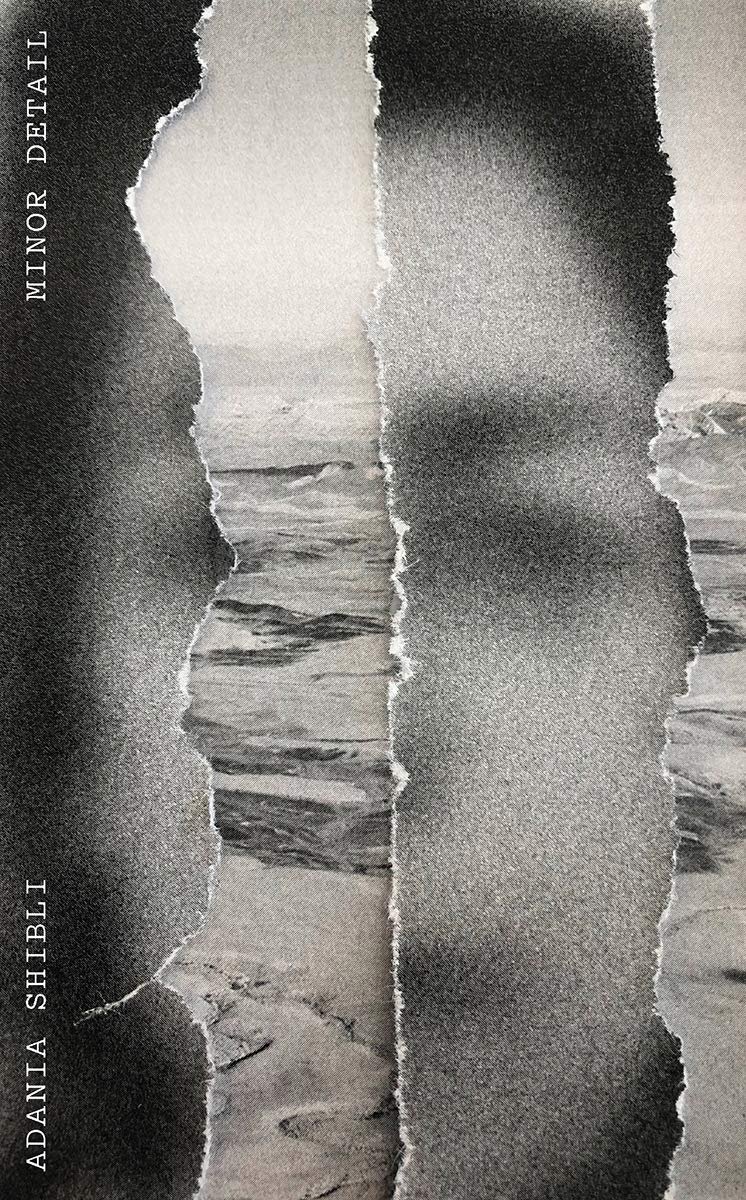
Minor Detail by Adania Shibli, translated by Elisabeth Jaquette (2020). Published by New Directions.
If you’re new here, and stumbled upon this blog through the mythical powers of the Internet, welcome! I know a lot of visitors to my website are people who randomly come upon this website through search engines like Google, but I also do have a lot of visitors who come back. Regardless: my name is Ashley, and I started this blog in order to keep track of everything I’m coming across in the world.
Running a book blog and reading almost two hundred books a year (I’ve done this almost every year of my life—it’s been a fascinating trend, even when I’ve been too busy to exist outside of life and work), I tend to know what kind of books I like. I’m also very intentional in analyzing the trends of what I’m reading, as I’m genuinely committed to diversifying the books I pick up and see new perspectives.
As a blogger and a professional writer/editor myself, a place I have always advocated for is the library. I was born and raised in the United States, and while not everyone has access to an incredible library system like we do, I’ve come to realize that Americans take for granted what their local libraries can provide for them. There are countries where people literally do not have access to books, but we have these free places where we can check them out for free along with movies and so many other goodies.
It’s like a wonderland for me, and I go to my local library often. I try to support them as well as much as I can, especially considering how library systems here in the US are increasingly coming under threat. People don’t want nice things it seems. I get a lot of my books from the library because of my limited budget and the fact, at the time of writing this, I was preparing to start a full time job after a lengthy time of being unemployed. I like to request the new releases, wander in the new fiction section after I pick up my requests, then head into the stacks to see what I can find that catches my eye this time.
This time it was the slim cover of Minor Detail. I’d been meaning to read this novel for quite some time now, but when I saw it’s slim jacket tucked between two massive novels that definitely overpowered it, I picked it up immediately. I took it to New York on a trip, but then was too shy to read it in public. I’m a bit fearful of the backlash of trying to consume both perspectives in terms of Palestine and what’s happening there, especially as where I usually stay has an orthodox Jewish community. I’ve been randomly approached by some of the younger men there before, who thought I was also Jewish, so I didn’t want to draw negative attention to myself for safety reasons.
I have to say upfront: books like these are inherently political whether you deny it or not. I went into this book with the approach of someone who specifically studied settler colonialism and genocide in graduate school (which to be upfront: with my training I do believe what is happening constitutes as a genocide), but I also think an equitable two-state solution is one of the only ways we can realistically end the bloodshed. The tragedy of the Nakba is a byproduct of colonialism (the British giving away land that was not theirs to give away—what they did with India/Pakistan and Partition created even more tragedy) and considering my background also in studying Partition literature, I think the British majorly messed up across the board pulling out of their colonies.
This is a general summary of my thoughts, not a comprehensive deep dive, as I don’t want to get into it with this blog post. This is about the novel. I think this preface is incredibly important though before I start talking about it, as this is a horrific novel about events that are still being denied to this day or brushed off—hence the title Minor Detail. Artificial borders and creating an us vs. them mentality is one of the biggest tragedies, as we forget we’re all human and commit atrocities like these.
Let’s get into the review, as this is getting long.
During the Nakba, a Palestinian woman is raped and murdered. In the present day, another Palestinian woman wants to uncover her story.
The edition of Minor Detail I had, which was the United States version, only consists of 105 pages. This is a brief story split into two parts, but if you’re someone who wants to truly understand what this book is saying, you’re going to want to take your time with this novel. AKA: it’s going to take a bit to get through this.
The story is split into two parts. The first one is set across the span of a few days during the Nakba. You don’t realize it at first, but we follow the detached perspective of an Israeli soldier as they move through the desert. At one point, they run into a tribe of Bedouins, and they kill everyone but a single person with their weapons.
Out of the Bedouins, the sole survivor is a young girl. The soldiers bring her back to the camp, and the soldier who’s perspective we’re attached to tries to deal with an animal bite, infected and full of pus, that’s festering on his leg. He ends up bringing the girl into his tent, where, in the middle of the night, he rapes her.
There isn’t a ton of detail on that, which feels like a mercy on the poor girl, but we do end up seeing what happens to her. This isn’t too big of a spoiler, as it’s in the synopsis, but they end up gunning down the teenage girl and burying her body in the ever shifting sands her fate was probably born from too.
We then skip to around the present day. Our new narrator is a Palestinian woman living in Ramallah, and, considering the situation most Palestinians live within, is fairly comfortable. She has a job and goes to work, but when she comes across the story of the young woman raped and murdered in the desert, she becomes slightly obsessed with finding out more about the girls’ case.
This is when the narration shifts more directly into the head of the protagonist, and we can start to see how the parallels between the past and present day are still there, if not enforced more. The narrator of the second part has an ID card that only allows her to travel within certain spaces of Palestine and Israel, so when she sets out to other territories to find out the truth, it puts her in great danger.
I’ll stop with the summary there, but in a hundred pages this book certainly has a lot to say about what Palestinians have faced in the past century. The title Minor Detail refers to how the death of this girl has become an afterthought, a minor detail, in the history of her people and everyone around them.
So when the second narrator even goes to a museum to try and learn more about the girl, the guy there explains another Arab girl’s death and chalks it up to the strange customs of the Arabs. With the narrator’s skepticism, we’re also probably thinking that it wasn’t the Arab community that killed the girl, but for some, that’s a minor detail as well.
Overall Thoughts
It’s such a little book, but it’s powerful. I want to read more of Shibli’s work if it’s translated in the near future, or if she continues to publish. The voice in throughout this book is steady and strong, even with the detached emotional style of the first tale, or how we get into the head of the second protagonist.
I do also want to read more literature from the region as well. I was honestly shocked that my library even had this book on the shelves, although I do see here and there they’ve increasingly had books on Palestine, like a cookbook or history book, stocked around the shelves or on displays. That’s an interesting change I’ve tracked—they’ve done a great job in general diverisfying the kinds of books they have available for patrons.
Anyways: pick this one up from your own library or local indie bookstore if you get the chance. I think it’s worth picking up at least once, especially as it’s short enough that, even with its mental density, you could read it in a weekend.
Follow me below on Instagram, Goodreads, and Letterboxd for more.

![Jeju-do (제주도) is one of those places that reminds you of how stunning the world is
[7.12.2024 부터 7.14.2024 까지]](https://images.squarespace-cdn.com/content/v1/5ea1f794501b7153b29e7cd7/1721033601522-554E76HR01JUHDWZBJ1I/image-asset.jpeg)