Silent House by Orhan Pamuk
Review of Silent House by Orhan Pamuk
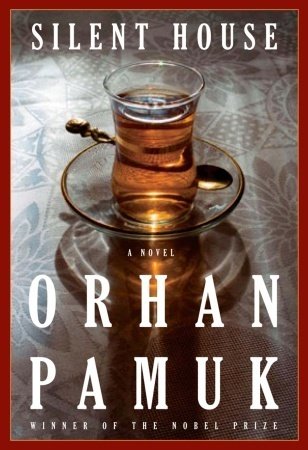
Silent House by Orhan Pamuk, translated by Robert P. Flynn (1983). Published by Knopf.
If you’re new here, and stumbled upon this blog through the mythical powers of the Internet, welcome! I know a lot of visitors to my website are people who randomly come upon this website through search engines like Google, but I also do have a lot of visitors who come back. Regardless: my name is Ashley, and I started this blog in order to keep track of everything I’m coming across in the world.
This blog post is interesting to me because lately, I’ve been struggling to get in my reading time. I was working for the longest time as a freelancer and contractor, but recently pivoted to an 8-5 job where I’m in an office. It’s not hybrid, so I’m always at home trying to put the puzzle pieces together of how I’ll get my reading done. I also continue working on this blog when I’m not at work, so the Instagram reels I’m fed about a 5-9 feel too real right now.
Anyways, I am trying to find that time to read here and there. Somehow I’m still on track for my Goodreads goal, even though I’ve been slowly giving up on the notion of reading goals in life. I think they can be a little too much pressure and takes the fun off of reading at the end of the day, and I want to read because I want to stay in touch with literature while also pursuing my side career as a writer.
Today’s book was an audiobook I specifically listened to while I was driving to and from work. Audiobooks can be something I often turn to in these times—and yes, I do consider them to be reading. I remember most of what I listen to in an audiobook, even when I’m doing laundry or cooking, and I’m able to break down the language as needed.
I was excited to find some Turkish literature on Libby because recently I visited Istanbul for the first time. It was a thrilling and difficult trip in so many different ways, but when I arrived back home in the United States I was excited to read more about Turkish culture, history, and literature.
Pamuk was on my list of authors to read even before going to Turkey, so it worked perfectly that it was available when I came home. So I checked it out and listened to it over the course of two weeks while driving to and from work.
Let’s get into the review!
In a former fishing village near Istanbul, a crumbling home is a refuge for a family with quite a bit of problems and friction.
This novel takes place in the titular silent house, which exists in the upper class town of Cennethisar. Once a fishing village that was modest and not too far from the capital city of Istanbul, now the house is old and slightly falling apart. Fatma, the matriarch of her family, lives in it alone. Her husband is dead and she is now a widow, hence why she’s living in this big house by herself.
Every summer her grandchildren come to visit her. There’s Faruk, who is an academic and historian in search of more work and glory, but unable to find anything of substance in his career and life. His sister Nilgun is an advocate and someone who feels for the people of her country, leading her to more leftist movements in a particularly volatile time of Turkish history. Metin is a high schooler who wants to go to the United States and leave this country behind.
We learn about how Fatma came this fishing village. Her husband was a young doctor once upon a time, and they came to this village because they were exiled from Istanbul. He was politically active and did not agree with the government at the time, and they were not allowed to come back to Istanbul. While he was alive, he worked on an encyclopedia obsessively that he said would fix their country and free people from their foolish belief in god.
That led them to be outcasts in the village, as he not only wasn’t focusing on his job, but he also was putting out pretty radical ideas for a village outside of the cosmopolitan city of Istanbul. Turns out if you go into the Turkish countryside and seaside in the mid-1900s and start saying Allah is a phony, then that’s going to cause some issues.
Nowadays Fatma is depressed and in need of help in order to do basic tasks, which is expected of her age and experiences in life. When the grandkids arrive when they’re expected to, we see how different they are from their brittle and humbled grandmother. She also sees them as grandchildren who don’t tend to her needs in a way she expects them too, which creates points of friction.
Each chapter is set up from a different person’s perspective, so we get to learn more about each of the grandchildren. All three of them are quite interesting to see more of, especially when certain events go down in the present day and it creates other ripple effects in each other’s lives.
This also takes place in a very specific moment of Turkish history: the coup takes place a month after the events of this novel, which explains certain characters’ political motivations and thoughts about what’s going on in the country. Fatma really represents this changing guard, as we see a through line from her youth to the other characters’ youth in terms of how Turkey has and has not changed.
Overall Thoughts
This was a bit of a long, meandering novel in many different ways, but I was truly down for the journey we went on it. I did find it a bit too long in some sections, and believed that it could be edited down at the end of the day, but the writing itself is fantastic. There is a solid reason why Pamuk is such a decorated writer in terms of awards and international recognition.
I also found the premise of this novel to be quite compelling and interesting. It’s a very specific snapshot and moment in Turkish history, so by having the past and present collide in the way that Pamuk structured it feels very real and like a live wire in itself. If you touch it wrong, then you’re going to get shocked. His writing style is languid and takes its time, really allowing you the chance to be immersed in the characters’ worlds.
Regardless, if you’re someone who wants to learn more about Turkish literature and history in general, then this is a good primer. It takes some time to get into the groove of things, but once you do that you might be like me and buckle down for the ride. If you don’t, then at least you gave it a chance.
I want to read more of Pamuk’s work in the future, but for now I need to get through the massive pile of library books accumulating dust in the corner of my room. Not enough time, but too much to read!
Follow me below on Instagram, Goodreads, and Letterboxd for more.
![Jeju-do (제주도) is one of those places that reminds you of how stunning the world is
[7.12.2024 부터 7.14.2024 까지]](https://images.squarespace-cdn.com/content/v1/5ea1f794501b7153b29e7cd7/1721033601522-554E76HR01JUHDWZBJ1I/image-asset.jpeg)