Review of The Limits of Whiteness: Iranian Americans and the Everyday Politics of Race by Neda Maghbouleh
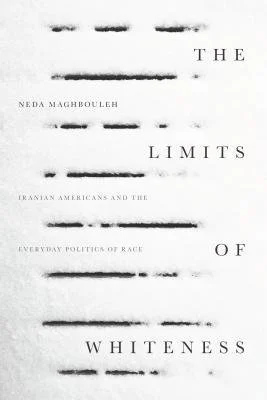
The Limits of Whiteness: Iranian Americans and the Everyday Politics of Race by Neda Maghbouleh (2017). Published by Stanford University Press.
If you’re new here, and stumbled upon this blog through the mythical powers of the Internet, welcome! I know a lot of visitors to my website are people who randomly come upon this website through search engines like Google, but I also do have a lot of visitors who come back. Regardless: my name is Ashley, and I started this blog in order to keep track of everything I’m coming across in the world.
This blog post is interesting to me because lately, I’ve been struggling to get in my reading time. I was working for the longest time as a freelancer and contractor, but recently pivoted to an 8-5 job where I’m in an office. It’s not hybrid, so I’m always at home trying to put the puzzle pieces together of how I’ll get my reading done. I also continue working on this blog when I’m not at work, so the Instagram reels I’m fed about a 5-9 feel too real right now.
Anyways, I am trying to find that time to read here and there. Somehow I’m still on track for my Goodreads goal, even though I’ve been slowly giving up on the notion of reading goals in life. I think they can be a little too much pressure and takes the fun off of reading at the end of the day, and I want to read because I want to stay in touch with literature while also pursuing my side career as a writer.
The book I’m writing a blog post today is actually one I’ve been meaning to read for years. A consistent theme throughout my life is that when there’s something I really want to read, I actually don’t get to it until many years later, unless I have a lot of unexpected free time and can actually get to it earlier. I also just have a lot to do, as I wrote before, so sometimes it takes a few years before I get to something.
Anyways, I’m Iranian-American, and spent my undergraduate thesis time for honors working on how the Iranian Revolution was a popular one through the feminist and women’s history lens. Modern Iranian history holds a deep part of my heart, and I still have family there. But I also know how we’re treated in the United States and the diaspora, which is why I was curious to read this book.
And man, I read it in one sitting. I was deeply invested in this one, as I found a lot of the situations in it familiar and something I could relate to.
Let’s get into the review!
An academic look into the history of Iranian Americans in the United States and the otherness they face, despite being labeled as white.
I would say there are multiple sides to this book, one of which, will I’ll start with, is the historical one. To be able to understand how Iranian Americans are treated in this country, you need to know the history behind it. There’s a wonderful play about this, Meet the Cartozians, but in the the 1920s an Armenian immigrant fought the US legal system in United States v. Cartozian. There, the argument was that people from Armenia and the surrounding areas, which is the modern Middle East, are actually white and deserve citizenship.
It’s through that case we have the modern conundrum of people from SWANA being considered as while. While some surveys now included the Middle East and North Africa as a place separate from the white category, legally, in the United States, every Arab, North African, Iranian, and Armenian are legally considered white.
There’s also the fact that Iranians and people from this region specifically are the original Aryans, which did form part of the legal basis in the 1920s. Nowadays, there’s a distinction even between Iranian and Persian, despite Persian being a specific ethnic background, so Iranian immigrants and their kids can distance themselves from the Islamic Republic—even if they themselves are not Persian ethnically.
As more Iranians came into the United States in the 1970s and 1980s with the rise of the Islamic Republic and the Iranian Revolution, that put us in a very specific tight spot, as Iranians, like Arabs, are not considered the standard white. Iranians are continuously othered in American society, and with a lack of understanding about Iran and the region as a whole, this has led to a very specific brand of racism and discrimination.
Maghbouleh draws out these stories through certain people—eighty, to be specific—but as someone who grew up in a specific Iranian diaspora community in Maryland, these stories rang quite true for many of us. From the discrimination faced in the schooling systems and from peers (making fun of hard-to-pronounce names, being called a terrorist, etc.) to how Iranian-Americans are singled out as brown and a threat in public settings, these stories reflect broader trends in American society and attitudes.
This is why I found this book particularly powerful—it synthesizes the history with firsthand experiences in the modern day, putting words as to how many Iranian-Americans feel on a potentially daily basis. For me, I have never seen this combination in writing before, let alone in nonfiction. A lot of it has been discussed in the few novels we get about the diaspora, but to feel it so directly addressed is a good thing.
Overall Thoughts
This felt like such a well-written book, and it’s digestible. Do I see a lot of non-Iranians going to casually pick something like this up? No, especially considering this is technically an academic text and coming out from a university press, but I think books like these should be taught at universities in the context of American and race studies.
I found The Limits of Whiteness to be a fascinating read despite knowing a lot of what was described in it. I’ve done academic readings and work in these contexts, so I was not surprised by anything I read in it, nor did I feel like I learned a ton of new things picking this book up, but I could see someone less familiar with it learning a lot.
That said, if you find this book interesting and haven’t picked it up already, I recommend going and sitting down with it. It’s not too long of a read, about 200 pages, and it’s important for people to understand the experiences of these communities, as many Middle Easterners, such as Arabs or North Africans, face similar experiences.
Follow me below on Instagram, Goodreads, and Letterboxd for more.
![Jeju-do (제주도) is one of those places that reminds you of how stunning the world is
[7.12.2024 부터 7.14.2024 까지]](https://images.squarespace-cdn.com/content/v1/5ea1f794501b7153b29e7cd7/1721033601522-554E76HR01JUHDWZBJ1I/image-asset.jpeg)