The Tokyo Suite by Giovana Madalosso
Review of The Tokyo Suite by Giovana Madalosso
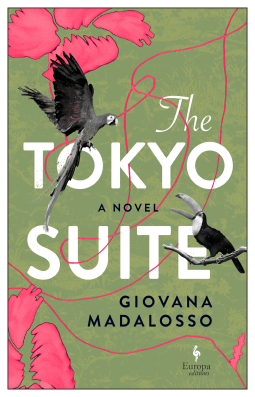
The Tokyo Suite by Giovana Madalosso, translated by Bruna Dantas Lobato (2025). Published in English by Europa Editions.
If you’re new here, and stumbled upon this blog through the mythical powers of the Internet, welcome! I know a lot of visitors to my website are people who randomly come upon this website through search engines like Google, but I also do have a lot of visitors who come back. Regardless: my name is Ashley, and I started this blog in order to keep track of everything I’m coming across in the world.
This blog post is interesting to me because lately, I’ve been struggling to get in my reading time. I was working for the longest time as a freelancer and contractor, but recently pivoted to an 8-5 job where I’m in an office. It’s not hybrid, so I’m always at home trying to put the puzzle pieces together of how I’ll get my reading done. I also continue working on this blog when I’m not at work, so the Instagram reels I’m fed about a 5-9 feel too real right now.
Anyways, I am trying to find that time to read here and there. Somehow I’m still on track for my Goodreads goal, even though I’ve been slowly giving up on the notion of reading goals in life. I think they can be a little too much pressure and takes the fun off of reading at the end of the day, and I want to read because I want to stay in touch with literature while also pursuing my side career as a writer.
For a while now I’ve been wanting to read more Brazilian literature, and it was when I was wandering my local library branch that I realized I saw a Europe Editions spine amongst the new fiction. I tend to really like a lot of the books that Europa puts out, so I read the synopsis and knew this was a book I wanted to read.
So I checked it out! It’s a bit of a shorter novel, so I managed to finish this one fairly quickly over the course of a muggy July evening.
Let’s get into the review.
A nanny kidnaps her wealthy clients’ daughter, forcing every character to confront the reality of their lives and how they engage with others.
The premise of this novel, and the main conflict, is relatively simple: Maju kidnaps Cora. Maju is a nanny from the outskirts of Brazil’s major cities, and Cora is the daughter of her wealthy clients. She’s young and unaware of the circumstances when Cora brings her onto a bus, unknowingly to cross a border into another country and disappear from the live she’s lived in Sao Paulo forever.
Each chapter alternates between Maju and Fernanda’s perspectives. Fernanda is Cora’s mother, and she’s kind of distant to her daughter. She’s a television executive who spends most of her time thinking about work and has friction with her husband, leading to an affair with another woman.
As she spends her days chasing the high of lesbian sex and doing her job (sometimes both at the same time, which is an interesting thing to read about), she tends to forget about her daughter. It’s how Fernanda and her husband fail to notice when Cora goes missing initially, and they have no idea how or why they got to this point. They also don’t know she’s been abducted, either.
All of this is happening while Maju tries to figure out how to avoid people noticing what’s happening. There are nannies everywhere in Sao Paulo, leading to the consequences becoming more grave if she’s caught. Over the course of the novel we come to learn more about Maju as she shepherds Cora around, especially when it comes to why she’s chosen to take this route at the end of the day.
This is a fairly short novel, but I would say it’s not only loaded with class discussions and expectations, but also the role of women in Brazilian society. Fernanda is successful in everything except being a mother, which is partially how we got to this situation. At the end of the day too this isn’t an unusual story probably—the army of nannies watching over kids probably witness similar things, too.
There definitely should have been more room to expand on their stories and learn more about these characters, as we learn the most about Fernanda and Maju, but I see why this novel chose to end its story the way it did. The author had a very clear intent to me.
Overall Thoughts
Considering how little Brazilian literature and media I’ve consumed over the years, I was really interested in what this book was depicting. The contrast between these two women is something I want to study with most books in general, so this was right up my alley when it comes to themes and conflicts that they were navigating.
As I mentioned before though, I think this book should have been a little longer so we can learn more about the world they’re living in. That’s my one critique of the novel besides the writing style itself. I don’t know if it was the author or the translator, but I found certain passages to really take me out of the book.
That said, if you come across this book and are interested in it, I highly recommend giving it a chance! I want to read more Brazilian literature after this for sure.
Follow me below on Instagram, Goodreads, and Letterboxd for more.
![Jeju-do (제주도) is one of those places that reminds you of how stunning the world is
[7.12.2024 부터 7.14.2024 까지]](https://images.squarespace-cdn.com/content/v1/5ea1f794501b7153b29e7cd7/1721033601522-554E76HR01JUHDWZBJ1I/image-asset.jpeg)