Review of The Woman Destroyed by Simone de Beauvoir
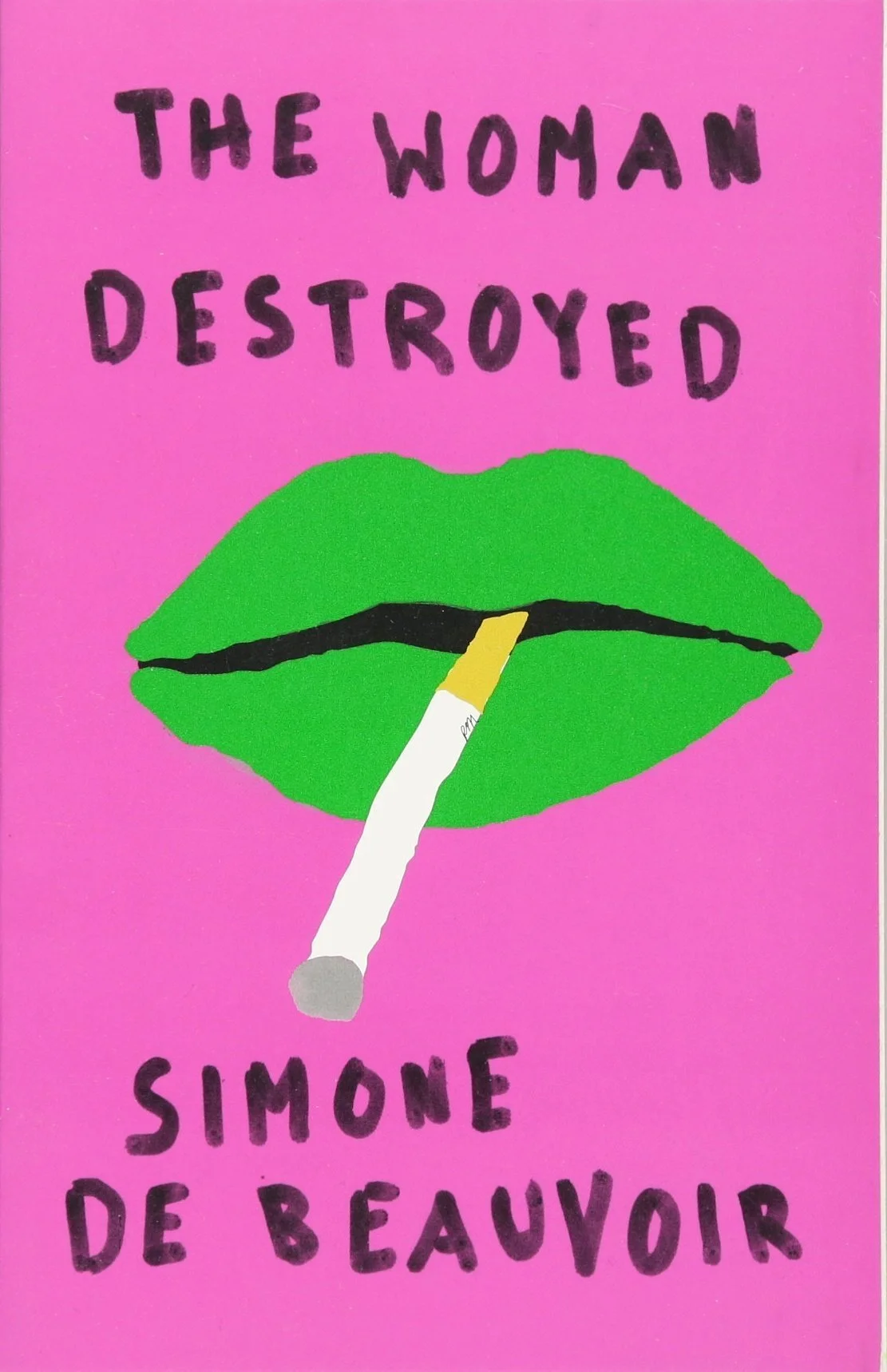
The Woman Destroyed by Simone de Beauvoir, translated by Patrick O’Brian (1967). Published by Pantheon Books.
If you’re new here, and stumbled upon this blog through the mythical powers of the Internet, welcome! I know a lot of visitors to my website are people who randomly come upon this website through search engines like Google, but I also do have a lot of visitors who come back. Regardless: my name is Ashley, and I started this blog in order to keep track of everything I’m coming across in the world.
This blog post is interesting to me because lately, I’ve been struggling to get in my reading time. I was working for the longest time as a freelancer and contractor, but recently pivoted to an 8-5 job where I’m in an office. It’s not hybrid, so I’m always at home trying to put the puzzle pieces together of how I’ll get my reading done. I also continue working on this blog when I’m not at work, so the Instagram reels I’m fed about a 5-9 feel too real right now.
I’m not reading as much as I used to, but I’m happy that I can fit in time to read these books. If I was not reading and writing still, then I might actually go a little insane. Life isn’t about our corporate jobs, so if you forget about what fills your cup, then you might find yourself becoming more depressed.
Anyways, The Woman Destroyed is a book I very much remember seeing all across social media before I started cutting back on my usage of these platforms. There was a time where it was definitely trendy for sure. I don’t have TikTok nor do I ever plan to use it, but I heard that this was one of the books that people were pushing on there.
And usually that makes me weary, as I know my taste and interests quite well and mainstream BookTok isn’t for me. I could make a blog post on why I think this, while also discussing the misogyny that comes with shaming women for what they like, but that’s for another day. However, I do like Simone de Beauvoir’s philosophy work and studied it throughout my academic career, which is why I wanted to pick this up.
I finished it fairly quickly, which I was surprised by. I think I was more used to her philosophy and expected me to take like a month to get through this because of the denseness of that kind of writing, but Beauvoir proves to be deft in writing across mediums while also being understood.
Let’s get into the review! I don’t want to ramble too much in the introduction.
The stories of three women and how they grapple with aging and the changing circumstances of their lives.
I wrote stories above about this book, but, in hindsight, I think I would classify each of these stories as a novella because of how long they are. I came into this book completely blind and had no idea it wasn’t a novel, but we spend quite a bit of time with each of the protagonists in this novel, so I would say we do get to know them quite well throughout the course of each story.
The first story is about a woman in her sixties, which is a quickly changing time already. Both her husband and her are confronting the fact that their careers are coming to a close, which leads to tension in some ways, but then there’s also the general fact that they’re aging. When her thirty-something-year-old son starts to debate if he wants to change his career, the main character suspects it’s more about appeasing his wife and father-in-law.
That leads to some acts of cruelty on her part towards her son, which shows us that this protagonist is deeply flawed, like so many people, in different ways. In many ways I saw this as a novella about how this elderly couple is watching a world around them change, with people making their own decisions, and in some ways they can’t confront the reality that the world is moving on without them.
The second story is about a younger woman—she’s in her forties, putting her in a different life situation than the previous protagonist. She lost her daughter prior to the events of the novel, and that largely left her alone in life because everyone else has left her. There is so much anger at the world and her circumstances in this story, where, if you feel like she was anything but a woman, she might not have been in the same situation as she is now.
This is an interesting narrative compared to the other two because the first and third women narrators are often caught up in the shenanigans spurred by men, but the second narrator has been left to her own devices. All three stories grapple with the expectations of women in society, which adds another layer because I presume all three women are upper middle class and above, and there’s a catalyst that divides their lives into one point from another.
Anyways—the third story is about a woman whose live is unraveling throughout a series of diary entries. She has two daughters with her husband, with one living abroad in the United States, but when he admits he’s had an affair, that’s the beginning of the end of their marriage. She lets him go with it at first, thinking things will change, but that doesn’t really happen in a way that she wants it to.
Her life slowly begins to crumble and consistently fills her with dread, referencing the title of The Woman Destroyed. As I wrote before, this is a story where the male character causes most of the problems, and when she decides to allow him to do what he wants, we see how not taking a stand for what she actually wants destroys her in the end.
Overall Thoughts
All three of these stories were very compelling to me, although I did enjoy the first and third stories more than the second. I do love a bitter woman ranting about everything that makes life not worth living anymore (in some ways), but I just couldn’t connect to that narrator as much as I could with the other two. All three stories in this collection are strong though and make excellent points about the treatment and condition of women, despite their privilege in society.
Anyways, I think Simone de Beauvoir is a brilliant thinker, despite her faults (I think it is worth noting she is a source of controversy in different ways), and I would recommend this book for those looking to dig deeper into her fictional work, or into stories that reflect French society at the time she was writing these.
I did enjoy reading this, but I don’t know if I would return to this book any time soon. It’s not my favorite and I don’t know if I enjoyed it enough to want to return to it in the next few years. Maybe in a decade or so, when I’ll be closer to the age of the second narrator.
Go pick this up at your local library or indie bookstore if you get the chance!
Follow me below on Instagram, Goodreads, and Letterboxd for more.
![Jeju-do (제주도) is one of those places that reminds you of how stunning the world is
[7.12.2024 부터 7.14.2024 까지]](https://images.squarespace-cdn.com/content/v1/5ea1f794501b7153b29e7cd7/1721033601522-554E76HR01JUHDWZBJ1I/image-asset.jpeg)