Three Tigers, One Mountain by Michael Booth
Review of Three Tigers, One Mountain by Michael Booth
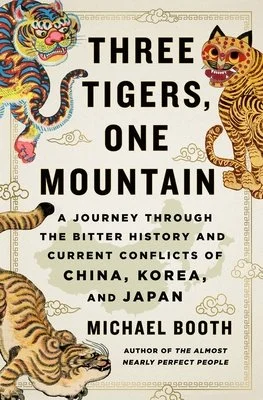
Three Tigers, One Mountain by Michael Booth (2020). Published by St. Martin’s Press.
If you’re new here, and stumbled upon this blog through the mythical powers of the Internet, welcome! I know a lot of visitors to my website are people who randomly come upon this website through search engines like Google, but I also do have a lot of visitors who come back. Regardless: my name is Ashley, and I started this blog in order to keep track of everything I’m coming across in the world.
This blog post is interesting to me because lately, I’ve been struggling to get in my reading time. I was working for the longest time as a freelancer and contractor, but recently pivoted to an 8-5 job where I’m in an office. It’s not hybrid, so I’m always at home trying to put the puzzle pieces together of how I’ll get my reading done. I also continue working on this blog when I’m not at work, so the Instagram reels I’m fed about a 5-9 feel too real right now.
Anyways, I am trying to find that time to read here and there. Somehow I’m still on track for my Goodreads goal, even though I’ve been slowly giving up on the notion of reading goals in life. I think they can be a little too much pressure and takes the fun off of reading at the end of the day, and I want to read because I want to stay in touch with literature while also pursuing my side career as a writer.
I found this book while wandering the aisles of my local library. Sometimes I go back to the Asian section to see what they’re offering on Korea, and when I saw this book I decided to give it a chance. I got through it fairly quickly, as the writing was pretty accessible.
Let’s get into the review!
An examination of the three economic powerhouses of East Asia and their qualms with each other.
Something to note about this book is that it’s not written by someone I would consider to be an academic or Asian political expert in general. I’ve read Booth’s other travel book, and I would very much consider him a travel writer. That’s one of the big gaps of this book.
He starts with Japan. Each “chapter” within the country sections focuses on a city Booth is in at the time. He fuses together his travel to these cities and countries with a broader history of the region, with an emphasis on more contemporary history.
An emphasis that emerges with Japan is rightwing nationalism. This book came out six years ago, but considering the recent election and results in Japan it’s interesting to see Booth describing this almost half a decade ago. It’s evolved since then for sure, especially considering the paternalistic racial attitudes projected during the empire and colonial expansion period.
Japan is the good bulk of this book, and the best-written of the three. When we got into Korea I found that Booth was relying much more on his travelogue narratives versus digging deep into the meat of contemporary Korea. Which happens to be my area of academic expertise (I did my master’s thesis on colonial Korean women’s literature), so I was looking at this more.
Sure, there are hints here and there about the current situation and how Korea got to this point (see: colonial period followed by the Korean War, then devastating dictatorships), but I found that this was the weakest of the three. China was fairly solid with analyzing how its communist-leaning politics and ideologies impact its relations with the other two countries.
When, in actuality, all three countries are inspired by each other. They’re similar but different tigers at the end of the day, but it would be irrational to say that the flow of cultural exchange didn’t exist, no matter the tensions that these countries face today.
Overall Thoughts
I think this is a conceptually interesting book and has a good premise, but overall I felt like that it fell flat. It needed to commit to the politics and history more in the Korea and China section versus relying on the travel narrative. That’s where the book feels lost to me, as Japan is so strong then it falls off.
Granted I’m not the average reader when it comes to these kinds of books, so I can see how it might an unfair justification in some ways of what I’m thinking. It might be a good primer and introduction to the region and its politics, but I wouldn’t entire take it as the gospel of recent East Asian diplomacy.
I say if you’re interested in the book pick it up! It might be worth a shot on your end, especially if you have a vetted interest in the area already. I’m just being particularly picky, and what might not work for me could work for someone else easily!
Follow me below on Instagram, Goodreads, and Letterboxd for more.
![Jeju-do (제주도) is one of those places that reminds you of how stunning the world is
[7.12.2024 부터 7.14.2024 까지]](https://images.squarespace-cdn.com/content/v1/5ea1f794501b7153b29e7cd7/1721033601522-554E76HR01JUHDWZBJ1I/image-asset.jpeg)