Women Without Men by Shahrnush Parsipur
Review of Women Without Men by Shahrnush Parsipur
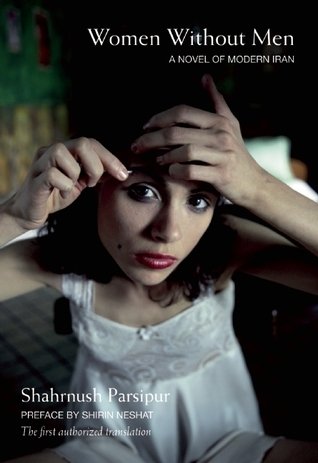
Women Without Men by Shahrnush Parsipur, translated by Faridoun Farrokh (1973). Published in 2012 by Feminist Press.
If you’re new here, and stumbled upon this blog through the mythical powers of the Internet, welcome! I know a lot of visitors to my website are people who randomly come upon this website through search engines like Google, but I also do have a lot of visitors who come back. Regardless: my name is Ashley, and I started this blog in order to keep track of everything I’m coming across in the world.
This blog post is interesting to me because lately, I’ve been struggling to get in my reading time. I was working for the longest time as a freelancer and contractor, but recently pivoted to an 8-5 job where I’m in an office. It’s not hybrid, so I’m always at home trying to put the puzzle pieces together of how I’ll get my reading done. I also continue working on this blog when I’m not at work, so the Instagram reels I’m fed about a 5-9 feel too real right now.
Anyways, I am trying to find that time to read here and there. Somehow I’m still on track for my Goodreads goal, even though I’ve been slowly giving up on the notion of reading goals in life. I think they can be a little too much pressure and takes the fun off of reading at the end of the day, and I want to read because I want to stay in touch with literature while also pursuing my side career as a writer.
When I was on vacation to Portugal, I brought multiple books with me. I was so tired at the end of the day though that I ended up only reading one of these books, and it happened to be the shorter book that brought: Women Without Men. I’d been meaning to read this, and I purchased my copy at the writer’s conference (AWP), as Feminist Press was there and having a sale.
It was at a salad place in Lisbon that I started reading this, then I finished it on the way home. Let’s get into the review, shall we?
Outside a busy Tehran, a group of women come to live together in a world where they can live without men.
There are five main characters in the text of Women Without Men, and although we don’t spend a ton of time with them in this book, they certainly make quite the impression. A quick history lesson though before we dive too deep into this: in 1953 Iranians democratically elected Mossadegh as the Prime Minister.
Mossadegh had promised to nationalize the oil industry and give it to the people, but the United States and Great Britain did not like that. They overthrew him and brought the Shah back into power, who became even more unpopular with his policies and eventually became a root cause of the Iranian Revolution. That’s how we got the current government in Iran.
There is more to this history, as we know things always can’t be simplified, but this is a pathway to the modern moment in Iran. However, recent Iran is a deeply patriarchal society despite the anti-Islam sentiments that run rampant in the diaspora circles—there’s a reason why the domestic abuse rates are so high in the country against women. Even the older, more liberal diaspora men I know tend to skewer conservative in this sense.
I mention 1953 because that is the backdrop of these women’s lives. The five characters are Munis (who dies in the novel and is a ghost), Mahdokt (who becomes a part of the system that let her down), Zarrinkolah (a traumatized prostitute), Faizeh (who betrays Munis and leads to her situation), and Farrokhlaqa (who is abused by her husband).
Because the patriarchal system has let these women down they decide to go to the garden together to see if they can solve the situations they found themselves in. Spoiler-that’s-not-really-a-spoiler: it’s a world without men.
All of this is sprinkled with a dash of magical realism. I would describe this as a feminist novel, though some of these characters are definitely not feminists because they’re conditioned by the society they live in. They might agree with some awful things that might have you doing a double take at how out-there it might be for a modern woman to have those opinions.
I would describe this very much as a reflection of Iran during this time. A lot of what is contained within these pages is still applicable, too, which is sad to see almost half a century later.
Overall Thoughts
In the United States it’s often hard to get Iranian literature in translation. I’ve done some roundups recently where I’ve been reflecting on that fact, but Women Without Men is one of the few novels that has managed to get a translation and stay in print.
It’s a well-written novel that definitely shows the many different sides of contemporary Iranian women. It shows also that they’re not a monolith, despite what Western media might portray, and that there’s a lot of nuance in these situations.
I say pick this one up if you’re looking to explore more Iranian literature, or pick up books from the region. I’m glad I picked up a copy of the book—I want to read more books from SWANA overall, and start a collection on Iranian literature in translation specifically.
Follow me below on Instagram, Goodreads, and Letterboxd for more.
![Jeju-do (제주도) is one of those places that reminds you of how stunning the world is
[7.12.2024 부터 7.14.2024 까지]](https://images.squarespace-cdn.com/content/v1/5ea1f794501b7153b29e7cd7/1721033601522-554E76HR01JUHDWZBJ1I/image-asset.jpeg)