Azadi: Freedom. Fascism. Fiction by Arundhati Roy
Review of Azadi: Freedom. Fascism. Fiction by Arundhati Roy
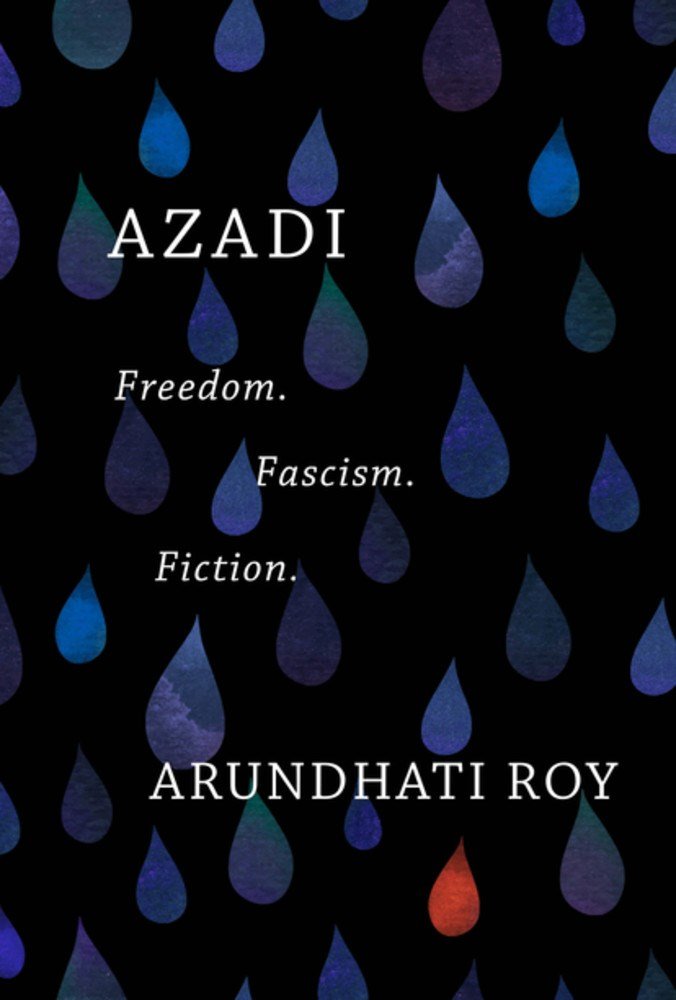
Azadi: Freedom. Fascism. Fiction by Arundhati Roy (2020). Published by Haymarket Books.
If you’re new here, and stumbled upon this blog through the mythical powers of the Internet, welcome! I know a lot of visitors to my website are people who randomly come upon this website through search engines like Google, but I also do have a lot of visitors who come back. Regardless: my name is Ashley, and I started this blog in order to keep track of everything I’m coming across in the world.
This blog post is interesting to me because lately, I’ve been struggling to get in my reading time. I was working for the longest time as a freelancer and contractor, but recently pivoted to an 8-5 job where I’m in an office. It’s not hybrid, so I’m always at home trying to put the puzzle pieces together of how I’ll get my reading done. I also continue working on this blog when I’m not at work, so the Instagram reels I’m fed about a 5-9 feel too real right now.
Anyways, I am trying to find that time to read here and there. Somehow I’m still on track for my Goodreads goal, even though I’ve been slowly giving up on the notion of reading goals in life. I think they can be a little too much pressure and takes the fun off of reading at the end of the day, and I want to read because I want to stay in touch with literature while also pursuing my side career as a writer.
Arundhati Roy’s work is something I’ve been dangling on the edge of for a long time. I’ve spent a lot of time pondering about how and when I should formally pick up a book of hers, especially after reading essays, analyses, and quotes from her for what might be a decade already.
It was the January 2026 Revolution and its aftermath, like the war, in Iran that ultimately led me to pick up Azadi. I’ve published on Kashmir before as well in an academic journal, and even won a Fulbright to document the understate stories in Indian narratives. I ended up losing the Fulbright because the Indian government refused to give me a visa.
Let’s get into my review of the book! I could ramble for a long time on the context of how we got here.
Arundhati Roy reflects on contemporary Indian politics, especially as they relate to religious tensions and Kashmir.
Going into this book, I kind of realized that this is a loaded topic. If you’re not familiar with Indian politics, or even broader South Asian politics, then this actually might be a difficult book to get through. It can be a started for getting your feet wet on these affairs, but I think this is the kind of book that might be more useful if you already know a little bit about Roy is commenting on.
Anyways, this book is a series of essays breaking down not only Indian politics towards Kashmir and Muslims, but also fiction, language, popular culture, and how the COVID-19 pandemic ties into all of the above. Lots to break down here—this is one of the few early books to tackle the subject of COVID, which I still feel we have a collective amnesia about.
Roy is strongly spoken about her thoughts on Kashmir in general, making her a contentious figure in contemporary India. Her sentiments on how Kashmiris are treated and seen in Indian society (aka: they are vilified, like many Muslims are today and blamed for several hot issues throughout the nation). The word “Azadi” means freedom in several languages, including Urdu and Farsi, and forms the crux of her thesis.
While we discuss the Kashmiri perspective on freedom and what it would mean for their right to self-determination, led by the calls of Azadi, we see as well Roy’s take on how it is a slogan and rejection of Hindu nationalism as a whole.
Which, if we look at the time of typing this, even West Bengal is becoming swept up in the Hindu nationalism project with the election of BJP officials. Years after Roy publishes this her words and work continues to be relevant as India continues to grapple with the same issues—and falls deeper into religious nationalism.
The COVID-19 pandemic and her discussion of what happened then adds another interesting layer. I did find this book to be quite repetitive and rehashing information I already knew and felt like I could’ve guessed she would say about it, but I found the COVID talk refreshing. Not many people have tackled it yet in the literary world.
Overall Thoughts
I feel like I enjoyed reading this book overall, although, as I wrote before, the essays began to feel repetitive in a way where I thought the book could’ve been edited or culled further. I could see someone else, who might not be deeply entrenched in these topics, might find it to be riveting all the way through.
That’s not to say the writing itself is bad—it isn’t at all. Every small snippet I’ve read so far from Roy has been brilliantly written. I do want to read more of her work, although I did put down Mother Mary after waiting an insanely long time to get ahold of the book.
So, for me, this is a book that I’m glad I read, but I don’t know if I would return to it soon. Maybe if I was going back and writing academic or journalistic work and needed something to reference.
All of this is to say though: if you enjoyed reading this kind of work, definitely give it a chance! Taste is so incredibly subjective and this could be your favorite book ever.
Follow me below on Instagram, Goodreads, and Letterboxd for more.
![Jeju-do (제주도) is one of those places that reminds you of how stunning the world is
[7.12.2024 부터 7.14.2024 까지]](https://images.squarespace-cdn.com/content/v1/5ea1f794501b7153b29e7cd7/1721033601522-554E76HR01JUHDWZBJ1I/image-asset.jpeg)