Family and Borghesia by Natalia Ginzburg
Review of Family and Borghesia by Natalia Ginzburg
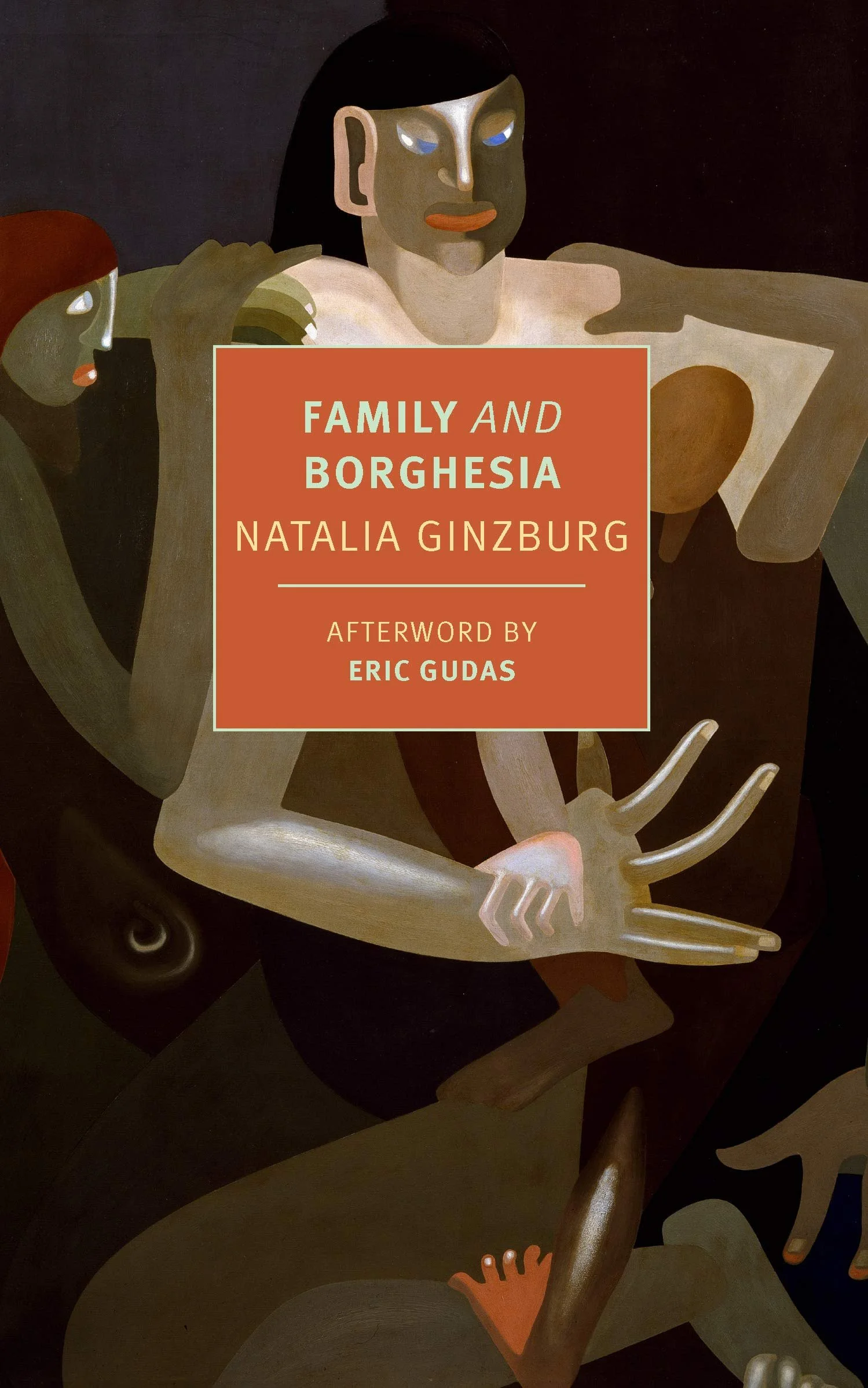
Family and Borghesia by Natalia Ginzburg, translated by Beryl Stockman (2021). Published by NYRB Classics.
If you’re new here, and stumbled upon this blog through the mythical powers of the Internet, welcome! I know a lot of visitors to my website are people who randomly come upon this website through search engines like Google, but I also do have a lot of visitors who come back. Regardless: my name is Ashley, and I started this blog in order to keep track of everything I’m coming across in the world.
This blog post is interesting to me because lately, I’ve been struggling to get in my reading time. I was working for the longest time as a freelancer and contractor, but recently pivoted to an 8-5 job where I’m in an office. It’s not hybrid, so I’m always at home trying to put the puzzle pieces together of how I’ll get my reading done. I also continue working on this blog when I’m not at work, so the Instagram reels I’m fed about a 5-9 feel too real right now.
Anyways, I am trying to find that time to read here and there. Somehow I’m still on track for my Goodreads goal, even though I’ve been slowly giving up on the notion of reading goals in life. I think they can be a little too much pressure and takes the fun off of reading at the end of the day, and I want to read because I want to stay in touch with literature while also pursuing my side career as a writer.
Ginzburg is one of those authors I’ve been trying to read more of as of late, but simply haven’t gotten around to. There are so many authors and books on my to-read list, but I’m slowly coming to terms with the fact that I probably will never get to all of these books in my lifetime. Reading is one of my greatest joys, but I can’t spend every waking moment of my life reading.
I did have an interesting in Family and Borghesia after seeing a copy of the book at a bookstore near Bryant Park that I tend to go into when I have time to burn—Kinokuniya is a lovely bookstore, although I’ve never actually bought any of the books in there. They do have good selection. I just tend to get most of my books from the library due to space constraints of my little bedroom.
I ended up reading Family and Borghesia on a whim. It was appealing in the moment because of the fact it was two novellas, which felt like it wasn’t a huge amount of commitment in the moment. I finished the book in two days.
Let’s get into the review!
Two novellas on aging, family, missed opportunity, and loneliness in 1970s Italy.
As I wrote before, this is a book that consists of two novellas. I found it to be quite the quick read, although I did split the two novellas up across two days in order to digest and not overwhelm myself. Even though I want to read more, I’m trying to be very intentional on how I’m reading and not just cramming things in.
The first novella is Family. Its main character is Carmine, who is a little bit over forty. He’s an architect and seemingly has a good life on the outside, and as he meets with a former lover with their kids to see a movie then go to a cafe, we see how exactly he’s not living the life he really wants. He doesn’t really like his wife, and he lives in postwar Italy, which comes with its own set of societal and familial problems.
While he’s from the countryside and made it financially, living an upper class lifestyle in the city, his wife mocks his parents when they come to visit from his ancestral home. They don’t have the resources to have nice clothes or even nice teeth, which she can’t stand. Classism comes strong here, but it also shows this sense of in-between worlds that many straddle in Italy and beyond.
But when he meets with his former lover, they discuss why things don’t work out. Turns out they had a kid together, and the child fell ill and didn’t make it through. That’s the beginning of the end of their fragmented relationship, and now, as Carmine grapples with the displeasures of his own life, he finds that he wants something more from this—and then he’s dying and cannot change things.
I found this to be a novella about missed opportunity and what happens if someone dwells on the past too much and “what could’ve been” from people and places that no longer exist the same way as they did in that moment. The second novella, Boghesia, follows a similar pattern.
Its main character is Ilaria, who lives in a cramped apartment with her brother-in-law, daughter, and daughter’s husband. She’s a widow who basically works as a maid in the household, cooking for anyone and everyone who comes around. A running storyline throughout the course of this novella is their cats and how they go out into the world, and how, when Aurora becomes pregnant and gives birth, so does one of their cats.
This is the weaker of the two novellas because while Ilaria’s story is also interesting, it’s not as complex as the first story. Carmine is someone who you really get to know and either like or despise, while Ilaria feels like someone who truly just goes through the routines of her life in a way that feels empty. Maybe this detachment is intentional on Ginzburg’s part, to show how this woman is just there and doing things in a cycle, but I found I enjoyed the first novella more because it felt more textured and rich.
Overall Thoughts
I would say that overall I did enjoy these novellas, even though, as I mentioned in the previous section, I thought Family was much stronger than Borghesia. I want to read more of Ginzburg’s work, as I think she creates these little worlds in specific pockets of time and space that I want to know more of.
Postwar Italian literature is a particular fascinating of mine, especially when it comes from women who were at the fringes of that society. Ginzburg was Jewish in fascist Italy during World War II, so I feel like her writing reflects a certain level of introspection and critique of Italian society during her lifetime—even in such a short novella.
I say if you have the chance to read either of these novellas, or the book in one go, go for it if it interests you. Where I live I tend to only get NYRB Classics through the library, as the independent bookstores are a little bit of a hike, but if you live in a major city I feel like you can find them. They’re all over New York bookstores, that’s for sure!
Follow me below on Instagram, Goodreads, and Letterboxd for more.
![Jeju-do (제주도) is one of those places that reminds you of how stunning the world is
[7.12.2024 부터 7.14.2024 까지]](https://images.squarespace-cdn.com/content/v1/5ea1f794501b7153b29e7cd7/1721033601522-554E76HR01JUHDWZBJ1I/image-asset.jpeg)