Shop Girl by Mary Portas
Review of Shop Girl by Mary Portas
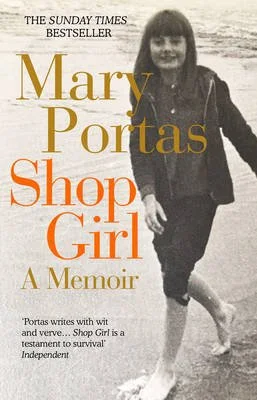
Shop Girl by Mary Portas (2015). Published by Transworld Digital.
If you’re new here, and stumbled upon this blog through the mythical powers of the Internet, welcome! I know a lot of visitors to my website are people who randomly come upon this website through search engines like Google, but I also do have a lot of visitors who come back. Regardless: my name is Ashley, and I started this blog in order to keep track of everything I’m coming across in the world.
This blog post is interesting to me because lately, I’ve been struggling to get in my reading time. I was working for the longest time as a freelancer and contractor, but recently pivoted to an 8-5 job where I’m in an office. It’s not hybrid, so I’m always at home trying to put the puzzle pieces together of how I’ll get my reading done. I also continue working on this blog when I’m not at work, so the Instagram reels I’m fed about a 5-9 feel too real right now.
Anyways, I am trying to find that time to read here and there. Somehow I’m still on track for my Goodreads goal, even though I’ve been slowly giving up on the notion of reading goals in life. I think they can be a little too much pressure and takes the fun off of reading at the end of the day, and I want to read because I want to stay in touch with literature while also pursuing my side career as a writer.
Now, I have never heard of Mary Portas really before picking up this book. I imagine that’s how most people came to learn about this book, but it was recommended to me as an example of someone who worked on the other side of the apparel industry compared to what I’m used to. I went to a fashion college in New York City and saw the glamorous and corporate side of things, but overall I tend to be more interested in garment workers and people involved—who often make less wages—on the other side.
Those perspectives aren’t really told as much, so when I saw the synopsis for this book I was really interested in reading it. I barely knew anything about it beyond a basic description—heck, I had no idea this was even about an Irish family. I really went into this one almost completely unaware, which, sometimes, can be the best way to read a book.
Let’s get into the review! I don’t want to ramble too much in the introduction.
The story of Mary Portas’ childhood and how she became a beloved British retail figure.
This is a book that is largely a memoir in many different ways, although it covers a large chunk of Portas’ life. We begin in her childhood, where she was born into a relatively large Irish family living in no-so-great condition. There wasn’t enough money being brought in, which meant there wasn’t enough to go around in general.
And for Portas, she didn’t notice these things at first. Despite having a more playful attitude and getting herself into trouble with the local church or out and about, life was simply something that was to be lived. She didn’t think about the clothes in her holes or how they didn’t eat fancy meals.
We see how Mary loved her mother especially during these portions of the memoir. Her mother is the glue that keeps the family together, so when she falls ill suddenly one day, when Mary is a teenager, she doesn’t know what to do when her mother passes away. It’s like the sun that kept this family alive was gone, and we see how it devastates everyone.
It also creates an immense riff between Mary and her father, one that may never be patched up during their lifetimes. The death of Mary’s mother creates a distinct divide between the more carefree days of her childhood, despite what little the family had during this time of her life, and the early years of adulthood.
As Mary grows more comfortable with herself, her body, and slowly learns to overcome the amount of grief she can get over, she describes her beginnings in the retail world. It starts as a way to make a little more money at the end of the day, but as we see throughout the memoir, it becomes a core part of who she is.
This is what drew me into the memoir to begin with, but considering we spent so much time in her childhood it felt a little out of place. I see why the memoir is structured like this, but for me personally as a reader I don’t know if it was a convincing enough jump for me. It feels a bit jarring.
Anyways—the adulthood portion of the memoir also feels pretty short compared to the childhood. We spend a lot of time going over her roots and what caused Mary to be the person she is today. Every chapter is a different vignette and story, which might’ve contributed as to why I felt the way I did.
Overall Thoughts
I didn’t go into this memoir with a ton of expectations, but, if we’re going to be honest, I wasn’t the biggest fan of it overall. I didn’t have an emotional attachment or was even aware of who Portas before going into this memoir, and while I appreciated the childhood vignettes the most, I found that I wasn’t drawn into the writing style or story beyond that.
Maybe my preference tends to be women discussing their dead mothers and how they shaped their lives and perspectives—like in Crying in H Mart—but I thought the golden part of Portas’s story ends there. it was more coherent as a memoir at that point, then it began feeling like it was a different memoir for me. Perhaps they should have been separate?
Anyways, I could see how someone else might love this memoir and how it expresses her story. She certainly shows her personality and backstory quite well through her writing, which makes her a strong writer in that sense.
While I don’t like it as much, I mention how someone else might like it more. Go pick it up if you have the chance and are interested—you might be one of those people!
Follow me below on Instagram, Goodreads, and Letterboxd for more.

![Jeju-do (제주도) is one of those places that reminds you of how stunning the world is
[7.12.2024 부터 7.14.2024 까지]](https://images.squarespace-cdn.com/content/v1/5ea1f794501b7153b29e7cd7/1721033601522-554E76HR01JUHDWZBJ1I/image-asset.jpeg)