How Does It Feel to Be a Problem?: Being Young and Arab in America by Moustafa Bayoumi
Review of How Does It Feel to Be a Problem?: Being Young and Arab in America by Moustafa Bayoumi
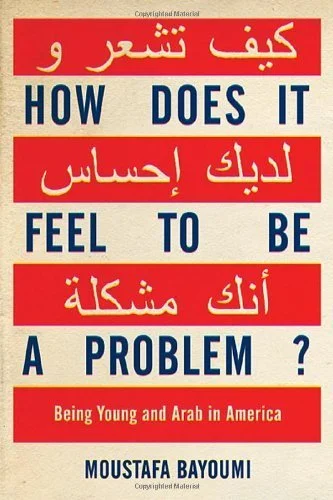
How Does It Feel to Be a Problem? Being Young and Arab in America by Moustafa Bayoumi (2008). Published by Penguin Press.
If you’re new here, and stumbled upon this blog through the mythical powers of the Internet, welcome! I know a lot of visitors to my website are people who randomly come upon this website through search engines like Google, but I also do have a lot of visitors who come back. Regardless: my name is Ashley, and I started this blog in order to keep track of everything I’m coming across in the world.
This blog post is interesting to me because lately, I’ve been struggling to get in my reading time. I was working for the longest time as a freelancer and contractor, but recently pivoted to an 8-5 job where I’m in an office. It’s not hybrid, so I’m always at home trying to put the puzzle pieces together of how I’ll get my reading done. I also continue working on this blog when I’m not at work, so the Instagram reels I’m fed about a 5-9 feel too real right now.
Anyways, I am trying to find that time to read here and there. Somehow I’m still on track for my Goodreads goal, even though I’ve been slowly giving up on the notion of reading goals in life. I think they can be a little too much pressure and takes the fun off of reading at the end of the day, and I want to read because I want to stay in touch with literature while also pursuing my side career as a writer.
The book I’m writing a blog post today is actually one I’ve been meaning to read for years. A consistent theme throughout my life is that when there’s something I really want to read, I actually don’t get to it until many years later, unless I have a lot of unexpected free time and can actually get to it earlier. I also just have a lot to do, as I wrote before, so sometimes it takes a few years before I get to something.
I read it along with the book The Limits of Whiteness, which felt like a solid combo to read together. That book is on how Iranian Americans are legally seen as white, but they are never included with people being perceived as white. Arabs fall into the same box, especially after 9/11 and the events that transpired in our home countries.
This book is a bit outdated now, but it definitely included a lot of valuable information and perspectives. Let’s get into the review!
A collection of stories compiling the experience of young Arab Americans in American society post-9/11.
This is a collection of stories, as I wrote above, which means all of the narratives compiled throughout this book are about different people living around the same time. This book was published in 2008, making it a completely different world in some ways because of how people engaged with each other (there was no social media in the way we use it today, nor was Internet as widespread) and on different issues.
Anyways, there are quite a few characters in these stories: they are Rami, Sami, Akram, Lina, Yasmin, Omar, and Rasha. Bayoumi specifically chose to tell the story of people living in Brooklyn during this time, which is interesting to me because of the proximity to 9/11. Many of the characters felt the grief and immediate ripple effects when the Twin Towers were destroyed, but they had different experiences because of the fact they were Arab.
Bay Ridge is also a prominent part of their stories, as Bay Ridge is an Arab and Muslim enclave. Within the neighborhood’s borders people can feel safe, but as we can see, once you step outside then there’s the potential of being called a terrorist or other slurs. Not all of the individuals interviewed in this book are Muslim though—there are Christians, like Sami, who doesn’t identify initially with Muslims at all.
It’s when he serves in the Iraq War and comes back he starts to realize the extent of the discrimination he faces as an Arab American. For another girl, she was traumatized in some way when she was refused the chance to run for student council, as she was a devout Muslim and could not attend the dances because they were seen as sinful by her religious community. Still she fought against the decision and uncovered a discriminatory practice by her school.
Then there’s Rasha, whose entire family was detained by the FBI. She lost a period of her life living in jail, despite being innocent, as the government officials thought they might be linked to terrorists. Her entire family was swept up that night, and she was separated from the men when they were taken to another facility.
These are only a small sample of the stories. Other notable moments include dreaming about returning to Syria with a future daughter, or a man who works to send Qur’ans out for free just so anyone who was interested in learning more about Islam can have the opportunity. I had never heard of such a thing!
Overall Thoughts
Although the content inside of it was fairly dated, as it was published almost twenty years ago, I find books like these to be incredibly valuable. People tend not to pick up books like these casually, finding it on the shelf of a library randomly and deciding to go for it, and so whenever I get the chance to write about them I leap for joy.
These are important stories, and they’re still relevant today. It’s been almost 20 years and we still haven’t faced a lot of the issues mentioned throughout it and tackled the roots of these problems (which is racism and ignorance, but we could find a lot of common ground by reading such stories). That’s pretty sad.
Personally, though, I was not a fan of Bayoumi’s writing style. Each story, or essay we could call it, was strong, but I feel like sometimes their writing simply was not enough to sustain my interest across the entire story. Regardless of that, I think this is such a solid book to try out if you want to learn more about this specific moment in time.
Pick it up if you’re given the chance! I think this is worth reading at least once if it interests you.
Follow me below on Instagram, Goodreads, and Letterboxd for more.
![Jeju-do (제주도) is one of those places that reminds you of how stunning the world is
[7.12.2024 부터 7.14.2024 까지]](https://images.squarespace-cdn.com/content/v1/5ea1f794501b7153b29e7cd7/1721033601522-554E76HR01JUHDWZBJ1I/image-asset.jpeg)