Journey to the Edge of Life by Tezer Özlü
Review of Journey to the Edge of Life by Tezer Özlü
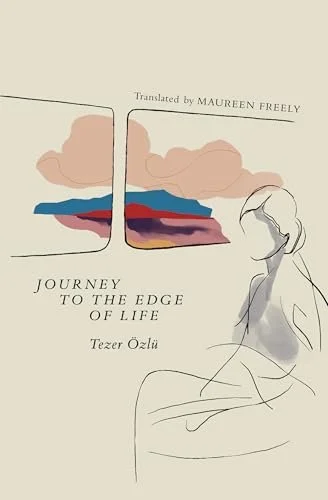
Journey to the Edge of Life by Tezer Özlü (1983). Published in 2025 by Transit Books.
If you’re new here, and stumbled upon this blog through the mythical powers of the Internet, welcome! I know a lot of visitors to my website are people who randomly come upon this website through search engines like Google, but I also do have a lot of visitors who come back. Regardless: my name is Ashley, and I started this blog in order to keep track of everything I’m coming across in the world.
This blog post is interesting to me because lately, I’ve been struggling to get in my reading time. I was working for the longest time as a freelancer and contractor, but recently pivoted to an 8-5 job where I’m in an office. It’s not hybrid, so I’m always at home trying to put the puzzle pieces together of how I’ll get my reading done. I also continue working on this blog when I’m not at work, so the Instagram reels I’m fed about a 5-9 feel too real right now.
Anyways, I am trying to find that time to read here and there. Somehow I’m still on track for my Goodreads goal, even though I’ve been slowly giving up on the notion of reading goals in life. I think they can be a little too much pressure and takes the fun off of reading at the end of the day, and I want to read because I want to stay in touch with literature while also pursuing my side career as a writer.
I’ve been trying to read more Turkish literature ever since I went to Istanbul in September 2024, but it’s been hard finding more Turkish books beyond Pamuk at my local library. I saw Journey to the Edge of Life on social media and decided I wanted to read it after I read the synopsis online.
Then imagine my surprise when I saw a copy on display at McNally Jackson while on a New York City trip. I bought this and a copy of Capitalists Must Starve. I read Journey to the Edge of Life on a different trip to Florida though.
Let’s get into the review!
A young woman travels through Europe to the graves of her literary idols.
Our main character in this novel has no name, but we learn more about her through her travels and musings on life and writing. I got the sense as we continued reading though that Özlü was actually writing and talking about herself and a journey she went through, but this is never fully confirmed in the text.
From that angle this is more interesting, as the character in Journey to the Edge of Life is specifically interested in writers who are no longer with us. It’s this obsession that propels her to start the journey, leaving behind her home.
It’s a lonely journey at times, but as we see in the writing, she does find companions. Some are platonic, while others are brief romantic flings that leave a lasting impression. In some ways she’s creating a novel for herself, but we see how these writers shaped her up until this moment.
At one point she describes her life back at Istanbul, which seems so dull and boring in some ways to her compared to the journey she’s on now. But by the time she checks off each writer’s grave and comes to learn more about where they’re from, she’s putting a piece of herself in context of literature.
Which is interesting to me as a writer because literary lineages are critical, but Özlü is literally taking that to the next level in terms of exploration. We often talk about the writers and books we admire, but her obsession is, well, obsessive. That’s what makes this novel feel like a liberation in the end too—she no longer feels bound by this duty to keep going in that sense.
Overall Thoughts
This is a fairly short read, and like most of Freely’s translations, it reads quite smoothly. As I wrote before I was interested in this book after reading the synopsis specifically, and I felt like it met my expectations. I want to read more of Özlü’s books in translation, although she died quite young and was unable to give us a prolific literary output.
I was also interested in this novel because of how it gives a new life to the travel diary/travelogue narrative. When I was in graduate school I had to take an entire class on travel writing through the lens of the Atlantic Slave Trade, and while this is a completely different subject, the autofiction lens is compelling considering we have a Turkish woman writing in the 1980s about wanting to see her European literary idols’ graves.
It’s a form of globalization that makes me want to learn more—that’s what I’m getting at here. Regardless, I really enjoyed reading this novel and would highly recommend picking it up if you’re interested!
Follow me below on Instagram, Goodreads, and Letterboxd for more.
![Jeju-do (제주도) is one of those places that reminds you of how stunning the world is
[7.12.2024 부터 7.14.2024 까지]](https://images.squarespace-cdn.com/content/v1/5ea1f794501b7153b29e7cd7/1721033601522-554E76HR01JUHDWZBJ1I/image-asset.jpeg)