Light and Thread by Han Kang
Review of Light and Thread by Han Kang
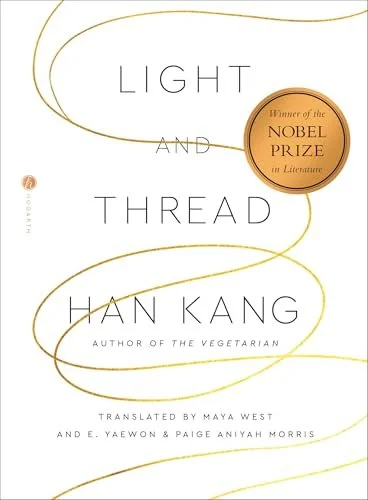
Light and Thread by Han Kang, translated by Maya West, E. Yaewon, and Aniyah Morris (2026). Published by Hogarth.
If you’re new here, and stumbled upon this blog through the mythical powers of the Internet, welcome! I know a lot of visitors to my website are people who randomly come upon this website through search engines like Google, but I also do have a lot of visitors who come back. Regardless: my name is Ashley, and I started this blog in order to keep track of everything I’m coming across in the world.
This blog post is interesting to me because lately, I’ve been struggling to get in my reading time. I was working for the longest time as a freelancer and contractor, but recently pivoted to an 8-5 job where I’m in an office. It’s not hybrid, so I’m always at home trying to put the puzzle pieces together of how I’ll get my reading done. I also continue working on this blog when I’m not at work, so the Instagram reels I’m fed about a 5-9 feel too real right now.
Anyways, I am trying to find that time to read here and there. Somehow I’m still on track for my Goodreads goal, even though I’ve been slowly giving up on the notion of reading goals in life. I think they can be a little too much pressure and takes the fun off of reading at the end of the day, and I want to read because I want to stay in touch with literature while also pursuing my side career as a writer.
I’ve been very focused on Korean literature the past few years, which, if you look at my blog indexes, might be a little obvious when it comes to my book reviews. I also did my master’s thesis on Korean colonial women’s literature and representations of resistance, so it is safe to say that I’m pretty deep in this hole.
Regardless, I’ve loved Han Kang’s work ever since I read The Vegetarian almost a decade ago. I’ve been an ardent follower of her writing in translation, and I’ve been blessed to get advance copies of all of her latest work after I picked up Greek Lessons through NetGalley and then We Do Not Part.
It was through the publisher I was gifted a copy of Light and Thread. I ended up reading through the entire book while on a flight home from Florida, as I was stuck in-between two strangers.
Here’s my review! I can see this introduction is getting quite long.
Han Kang’s reflections on her life and practice as a writer, especially as it pertains to her work in Human Acts and We Do Not Part.
This is a nonfiction book, so for those looking for a novel, this is not what you should be picking up as your start to Han Kang. If you are starting out with Han’s work though, this could be a primer if you want to understand what exactly goes into her process writing—although there are some minor spoilers about the events in certain novels like We Do Not Part.
I didn’t realize when I picked this up originally as an advance copy that this was Han’s Nobel Prize lecture, which makes sense considering its length. In the digital copy I had there are entire sections of poems, which were lovely to read (even though I definitely got the sense a fiction writer was writing this work), but it felt a little out of place in the moment.
The main focus of the narrative here is around Han’s work as a writer, especially when it comes to how she had these burning questions about the meaning of life and abstract concepts such as beauty, despair, and violence. It makes sense, as she discusses her childhood in Gwangju before moving, and how she came to write about the Gwangju Massacre in Human Acts.
A good chunk of this lecture is spent dwelling on what drove her in the period where she wrote Human Acts, then We Do Not Part. The first novel was a bit more personal in her world, as Han is from Gwangju (as I wrote before), but the Jeju massacres after the uprising is newer territory. I was shocked to find this novel available after my last trip to Jeju, as I was searching for history books on the uprising and what happened but could literally find very few books on the subject.
Anyways, lots to dwell upon with Han as she recollects about her process and what went on in her brain during that time. This is a well-written reflection and organized quite well, although I do wonder if it works as a book. I wanted a bit more from it—more on that later.
This is a bit of a tangent, but as someone who’s studied Korean literature and also dives deep into contemporary Korean literature, specifically by women (interestingly, a lot of what we’re getting in translation nowadays from Japan and Korea are women writers), is how Han directly addresses Korean trauma and history beyond colonialism.
Maybe this is just what we’re getting in translation for the English-speaking world, but I find that a lot of books deal with the Japanese occupation and not the trauma inflicted by Korea’s own authoritarian government.
Overall Thoughts
I really enjoyed this book, which is why I got through it so quickly. I find that books below 200 pages and within the realm of enjoyment, not feeling like a duty, are the books I get through the most. I blink and they’re over! It helps that Han is just such a gorgeous writer, and the translation feels like it’s just right.
With the subject of this being a speech that was turned into a book, as I wrote before I find that it makes sense, but I did really want more from it. The fragments are connected enough that it works as a cohesive unit, but because they are fragments I simply wanted to see more from the book as a whole. I don’t know if this is a must have in Han’s collection of work in English, but definitely something people who want to understand her and her process should pick up.
That said, this is still a beautiful book and I recommend it to everyone. Han’s work is so special and significant in the grand scheme of literature, especially for Korean representation. Beyond the popular culture there’s a real history and contemporary trauma—books like these help us put the pieces together.
Follow me below on Instagram, Goodreads, and Letterboxd for more.
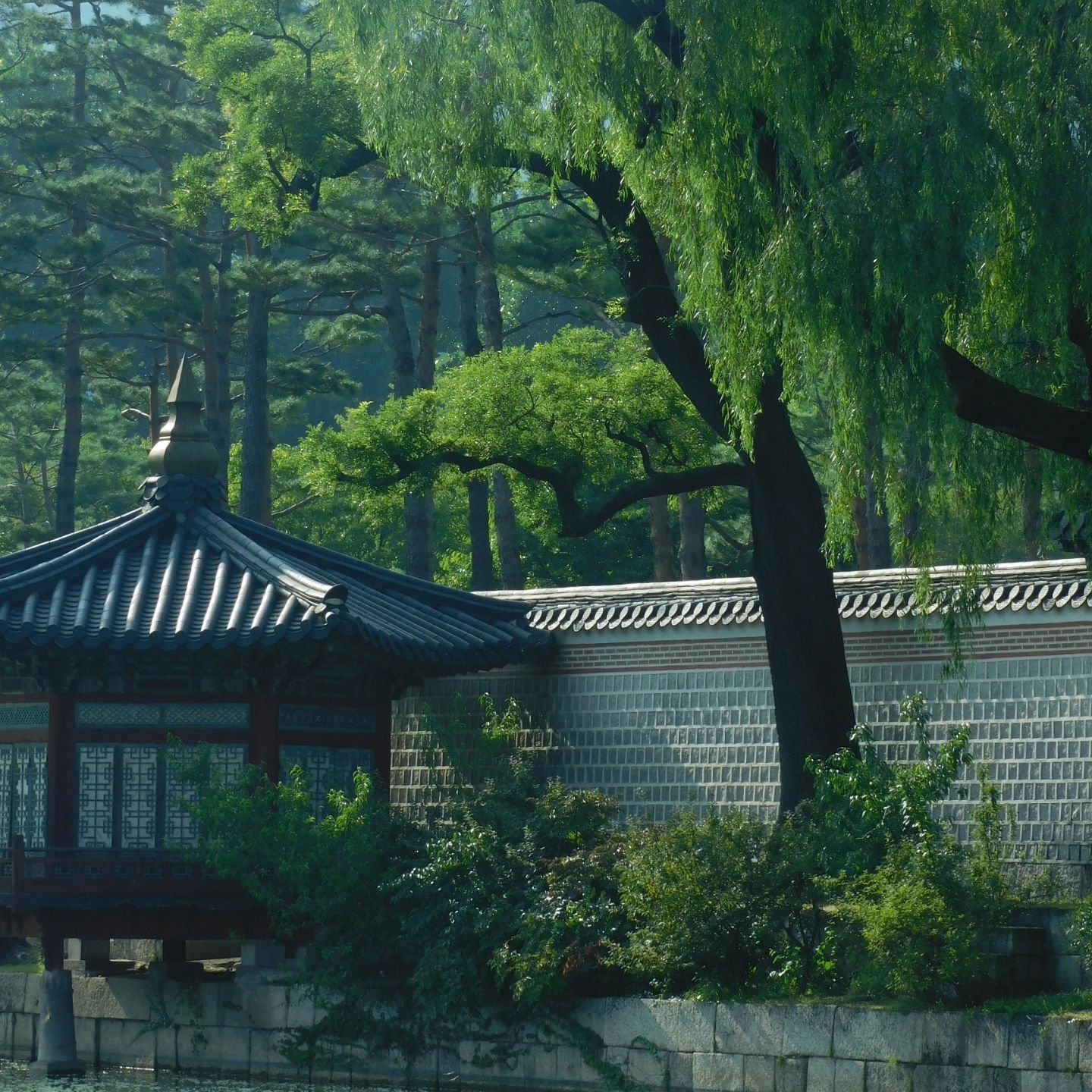
![Jeju-do (제주도) is one of those places that reminds you of how stunning the world is
[7.12.2024 부터 7.14.2024 까지]](https://images.squarespace-cdn.com/content/v1/5ea1f794501b7153b29e7cd7/1721033601522-554E76HR01JUHDWZBJ1I/image-asset.jpeg)