Lonely Crowds by Stephanie Wambugu
Review of Lonely Crowds by Stephanie Wambugu
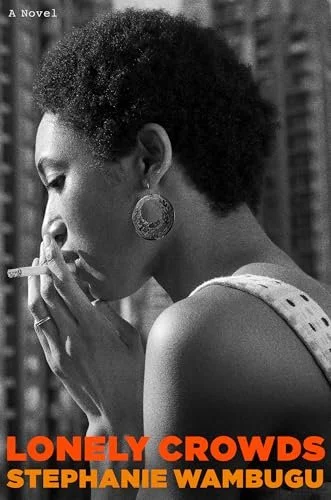
Lonely Crowds by Stephanie Wambugu (2025). Published by Little, Brown and Company.
If you’re new here, and stumbled upon this blog through the mythical powers of the Internet, welcome! I know a lot of visitors to my website are people who randomly come upon this website through search engines like Google, but I also do have a lot of visitors who come back. Regardless: my name is Ashley, and I started this blog in order to keep track of everything I’m coming across in the world.
This blog post is interesting to me because lately, I’ve been struggling to get in my reading time. I was working for the longest time as a freelancer and contractor, but recently pivoted to an 8-5 job where I’m in an office. It’s not hybrid, so I’m always at home trying to put the puzzle pieces together of how I’ll get my reading done. I also continue working on this blog when I’m not at work, so the Instagram reels I’m fed about a 5-9 feel too real right now.
Anyways, I am trying to find that time to read here and there. Somehow I’m still on track for my Goodreads goal, even though I’ve been slowly giving up on the notion of reading goals in life. I think they can be a little too much pressure and takes the fun off of reading at the end of the day, and I want to read because I want to stay in touch with literature while also pursuing my side career as a writer.
Lonely Crowds is actually a book I’ve been keeping an eye on for a while. I have books that I learn about through the publishing grapevine, and very few are ones that I really am extremely pumped for. I read the synopsis for this book and was really intrigued by it—and I love a good art school narrative.
So I put in my request at the local library before it arrived and was ready to read it as soon as it came in. I ended up finishing the book in one go, which is a good sign for it.
Let’s get into the review! I don’t want to keep rambling in the introduction.
The story of two Black girls, their coming of age, and how they became artists.
Our main character in this novel, or at least the one we get the perspective of, is Ruth. She’s the child of immigrants living in New England, and the recent recipient of a scholarship to a prestigious local Catholic school. While she expects to be the only BIPOC and lower income student in the school, she meets Maria and is pleasantly surprised.
A Panamanian orphan, Maria lives with an aunt who neglects her. Ruth and Maria take to each other immediately, and that shapes the course of the rest of the novel. We see them first in their high school days, where they go to Catholic school and dream of going college at Bard and studying art.
We see from the beginning how their relationship is intense. When they go to college and have the art school experience they dream of before, though, that’s when we start to see the cracks in their relationship. The art world is competitive, and as Ruth and Maria have diverging paths and friends, it’ll cause some ruptures in their relationship.
The final arc of the novel takes place in New York City during the late nineties, which is a rough place to live in itself. Both Ruth and Maria are adults at this point, and we see the consequences of what happened during their high school and college years. Some things we read about are joyful, others not so much.
The art world, too, is a difficult one to navigate. Now imagine being two young women of color who come from dysfunctional backgrounds. While Ruth’s parents are still together, we see from her narrative and thoughts that they should not have stayed together. Their relationship is an unhappy one, setting the stage for how Ruth views the world and romance.
For Maria, whose mother killed herself, she does not really know love. Ruth might be the closest thing she has to love throughout the course of the novel, and while these two can be obsessed with their own goals, when they’re on those diverging paths we can see how they can actually be toxic when with each other.
It also doesn’t help that Maria puts on a persona and Ruth aimlessly drifts after her. A big thread throughout the novel is that Ruth lives in Maria’s shadow, even when she’s not there physically.
Overall Thoughts
I enjoyed reading this novel, but I don’t know if this is one I would return to in the future. As someone who reads a lot of art world and art school narratives—and watches movies in this arena too—there’s a glaring lack of representation and BIPOC characters in these kinds of stories.
I really appreciated both of these characters and their backgrounds, even if I felt disconnected from them at times. I could really sympathize with them both, even when we’re stuck inside of Ruth’s head for the entirety of the novel, and I wanted to know more about them and their desires, lust, and wishes in life.
Anyway, I thought the writing in this was also well-done. It’s a bit of a heavy ask to cover three phases of their lives in the course of a novel about three hundred pages, but I thought Wambugu did a good job with it. I was happy with the novel overall, but I don’t see myself simply returning to it in the near future.
Definitely go check it out at your local library or indie bookstore if you’re interested and get the chance! I think novels like these are such a good find, even if it’s a little bit outside of your usual areas and genres of literature.
Follow me below on Instagram, Goodreads, and Letterboxd for more.
![Jeju-do (제주도) is one of those places that reminds you of how stunning the world is
[7.12.2024 부터 7.14.2024 까지]](https://images.squarespace-cdn.com/content/v1/5ea1f794501b7153b29e7cd7/1721033601522-554E76HR01JUHDWZBJ1I/image-asset.jpeg)