We Have Always Lived in the Castle by Shirley Jackson
Review of We Have Always Lived in the Castle by Shirley Jackson
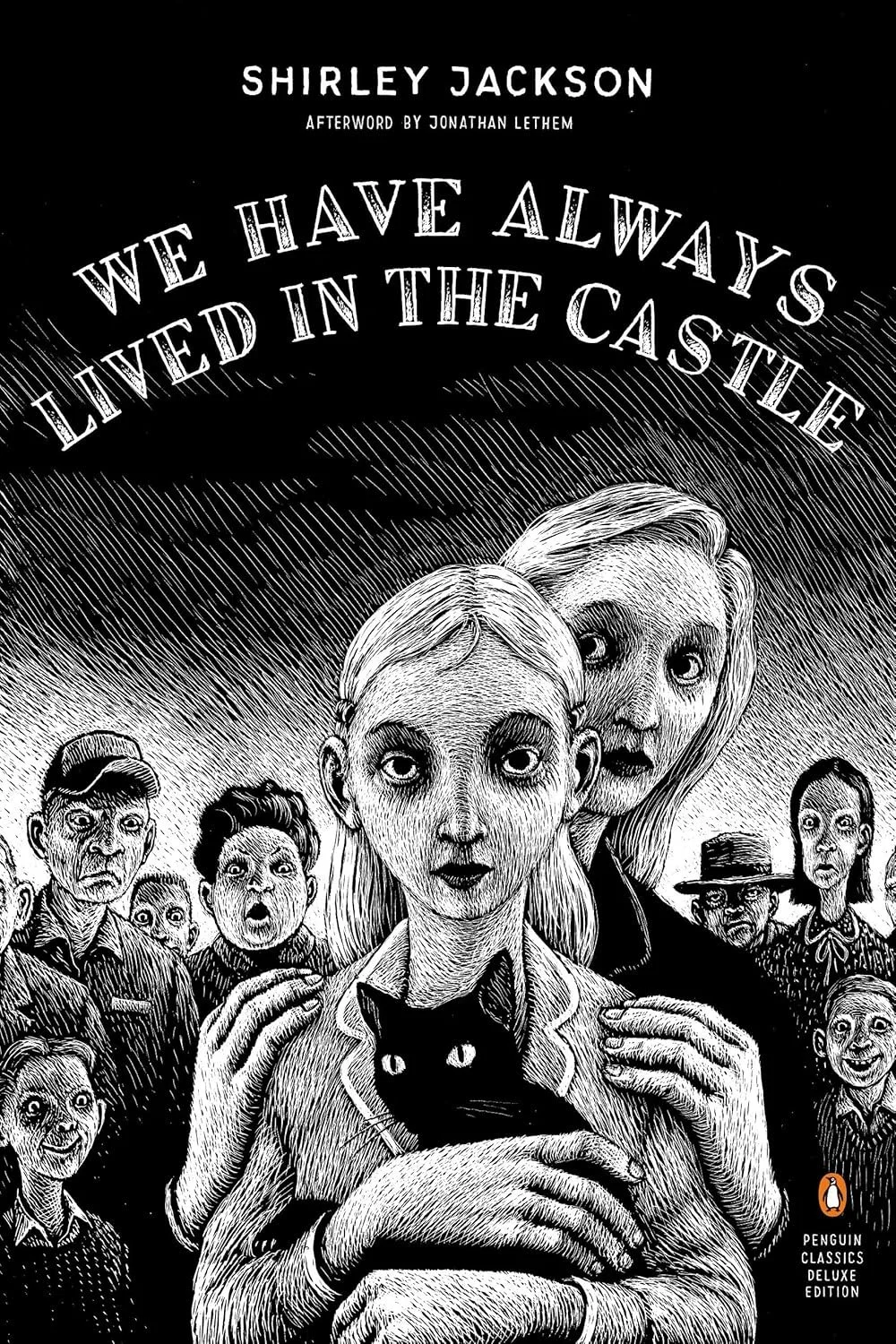
We Have Always Lived in the Castle by Shirley Jackson (1962). Published by Penguin Books (2006).
If you’re new here, and stumbled upon this blog through the mythical powers of the Internet, welcome! I know a lot of visitors to my website are people who randomly come upon this website through search engines like Google, but I also do have a lot of visitors who come back. Regardless: my name is Ashley, and I started this blog in order to keep track of everything I’m coming across in the world.
A lot of my blog posts for the past year or so have been starting with discussing the state of my employment, as I one of the many people looking for a full-time job when it seemed impossible to find one. This blog post (although it’s coming out months later from when I’m typing this due to the sheer nature of my publishing schedule) is one of the last blog posts to come out of the period where I was lazing about and doing content creation/freelancing full time.
It was a fruitful time, but I was just ready to work a corporate job and see what that was like. In the days leading up to when I was starting my job, I was reading, writing, and consuming as much as possible because I had this fear that I was going to not have time once I was starting this 8-5 job.
Anyways, when I was writing blog posts specifically I was listening avidly to the audiobook of We Have Always Lived in the Castle. I ended up listening to it while I was cooking and doing laundry too, so I ended up getting through this book fairly quickly and before I went into work for the first time.
I’d been meaning to read Shirley Jackson for the longest time, but never got around to her work beyond “The Lottery,” which I fondly remember reading in the seventh grade. I know a lot about Shirley Jackson and her work in general, but it’s amazing how I never actually sat down and read any more of it throughout the years.
I do want to read more of her work in general sometime in the near future. Right now my to-read list and advance copies are a bit overwhelming, so I don’t think it’ll be this year, but maybe in 2026 or 2027 I’ll be in the mood to pick up some more of her short stories or novels.
Alright—I can feel myself rambling. Let’s get into the review!
A young girl grapples with her family’s mysterious death, her living family members, and being ostracized.
Our main character in this novel is Merricat, whose full name is Mary Katherine, and she lives in a mansion (known as the castle in the title) with her older sister Constance and uncle Julian. Years prior to the events of the novel, something awful happened inside of the home: their entire family was poisoned at dinner.
Merricat had been acting out at the dinner and was sent away, but that’s what ended up saving her—or not, we don’t know who killed the family until the end of the novel. There was arsenic in the blackberries served with their dinner, so the suspicion fell on Constance as the murderer because she typically prepared the family’s food.
The villagers from the nearby town ignore the three of them, and mock their existence. Merricat is the only one who dares to venture into the village, as Constance has not left the home in many years, and Uncle Julian has slightly gone mad and is writing memoirs about what happened leading up to the death of his family members.
Constance spends her days taking care of him and Merricat tries to find her footing in the world, and throughout the course of the novel we see the ripple effect this had on the remaining family members. In some way this is a mystery, in others it’s a horror.
There’s only one family that comes to see them up in the castle on the hill, despite what the other villagers say about the family and Constance. They continue to come and see them for tea time and visits, something that continues throughout the course of the novel, even when things start to sour even further.
That’s a core aspect of the novel though: the treatment these girls and their uncle get from the townspeople. They firmly believe Constance is the murderer, and because of this judgement they treat the entire surviving family in a way that’s genuinely awful instead of rallying to support their community members.
The cruelty of other beings is a highlight of all of this, but there is also love and devotion scattered throughout the pages as well. We see that in the sisters specifically as they stick with each other even in the family’s ugliest moments.
Overall Thoughts
I mentioned and wrote before that I want to read more of Jackson’s work, and this is the primary reason why. I enjoyed reading (or listening) to this novel and thought that it was simple, but so powerful and effective in getting the message across. Her work is dark, but it reflects the true nature of humanity.
There is both love and cruelty. You cannot have love without cruelty, lest you take it for granted. This novel shows an extreme form of cruelty, but I could also see this happening in real life so easily. People are genuinely awful to one another, and while this novel takes that kind of story a step further, we can see how the love between the two sisters perseveres despite all of what’s happened to them.
I think this is worth picking up at least once whether you’re interested in the plot, reading more of Jackson’s work, or want something darker to read. I am truly glad I picked this one up from Libby, and that my library offers me the opportunity to read such books for free!
Follow me below on Instagram, Goodreads, and Letterboxd for more.
![Jeju-do (제주도) is one of those places that reminds you of how stunning the world is
[7.12.2024 부터 7.14.2024 까지]](https://images.squarespace-cdn.com/content/v1/5ea1f794501b7153b29e7cd7/1721033601522-554E76HR01JUHDWZBJ1I/image-asset.jpeg)